

Bricasti
Pay Over Time
Split your purchase into easy payments.
Fast approval with Klarna.
Select Klarna at checkout to split your purchase into smaller payments.
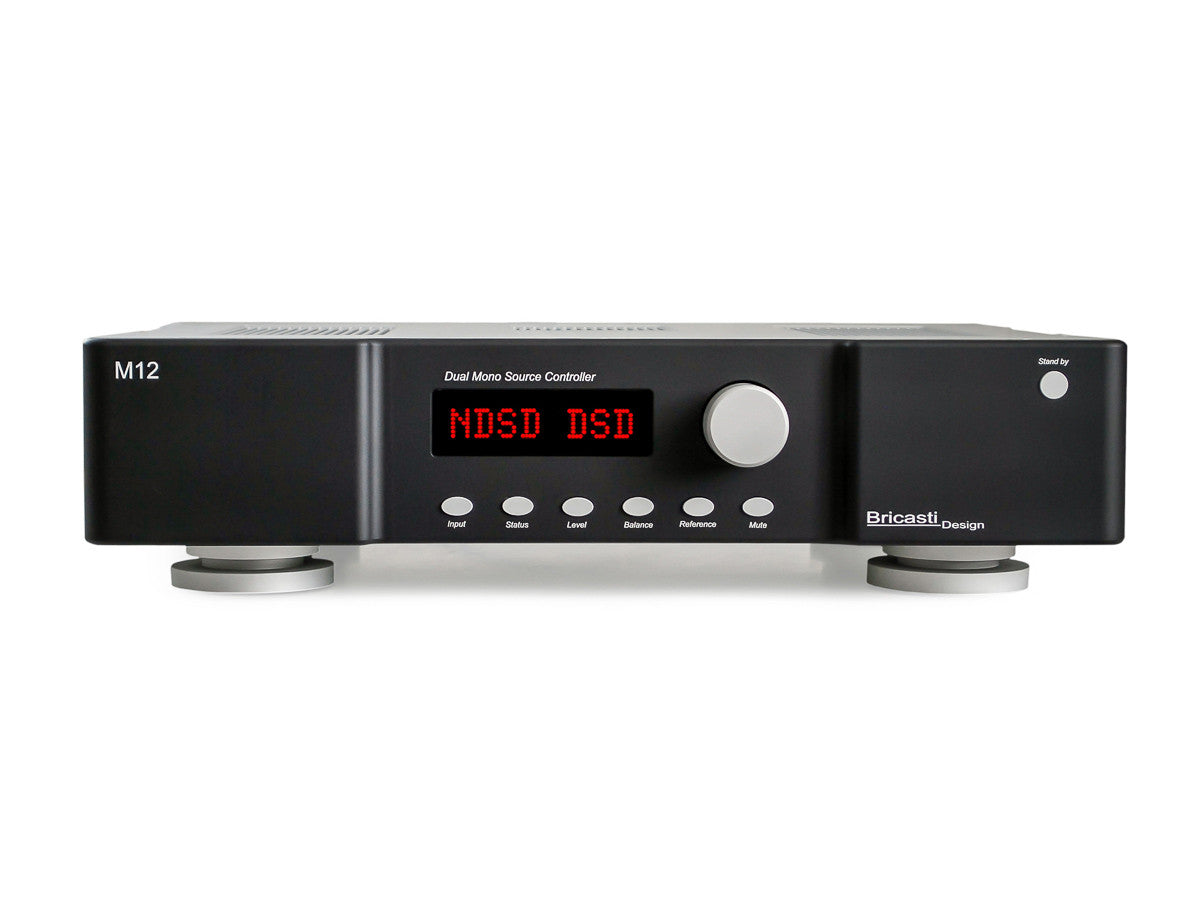
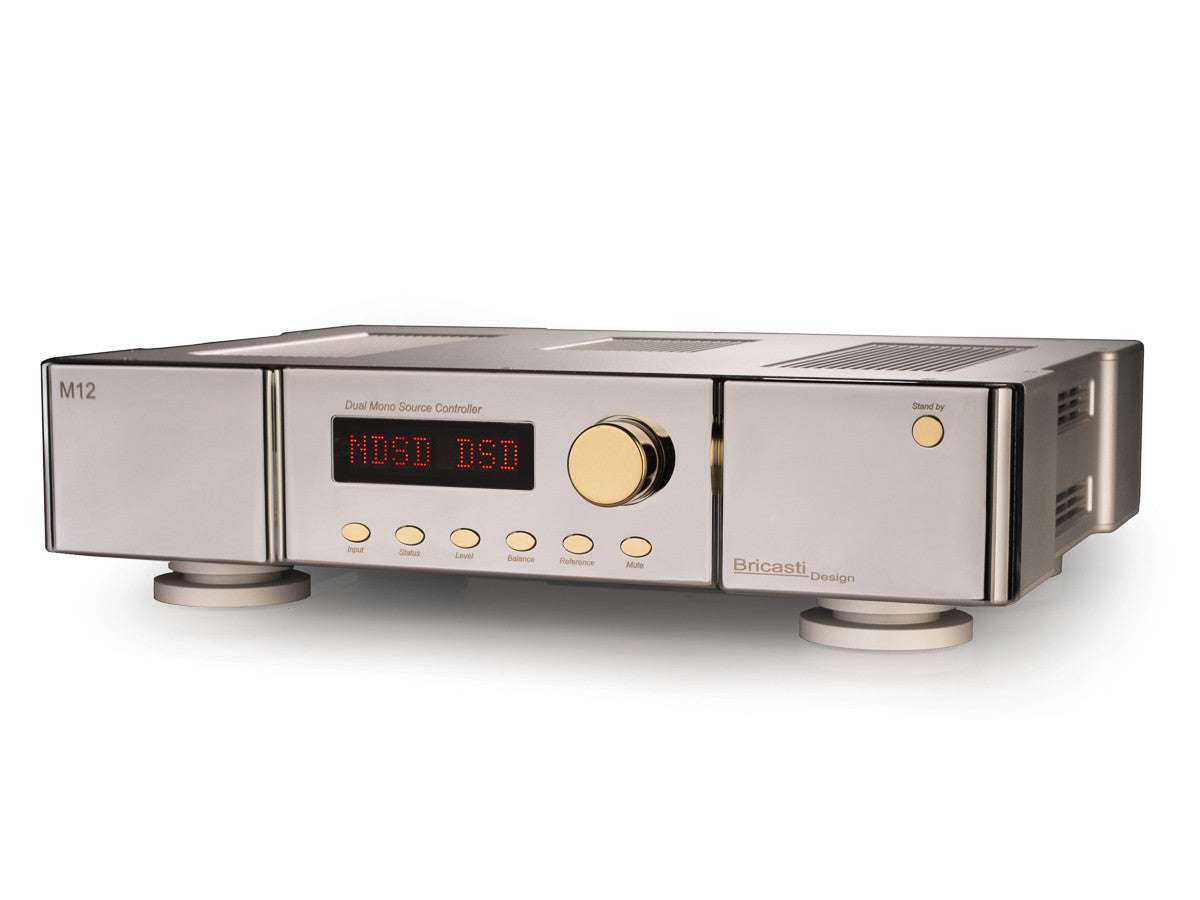
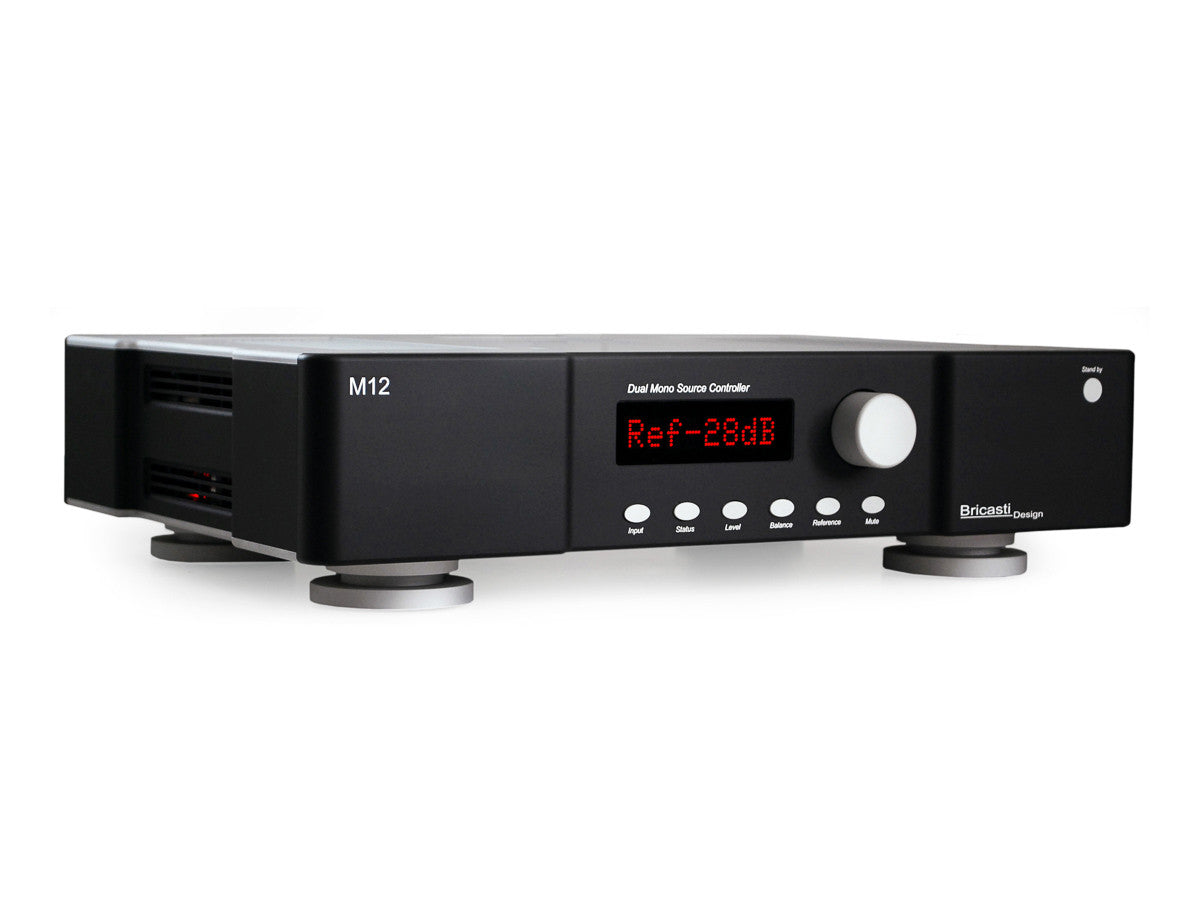
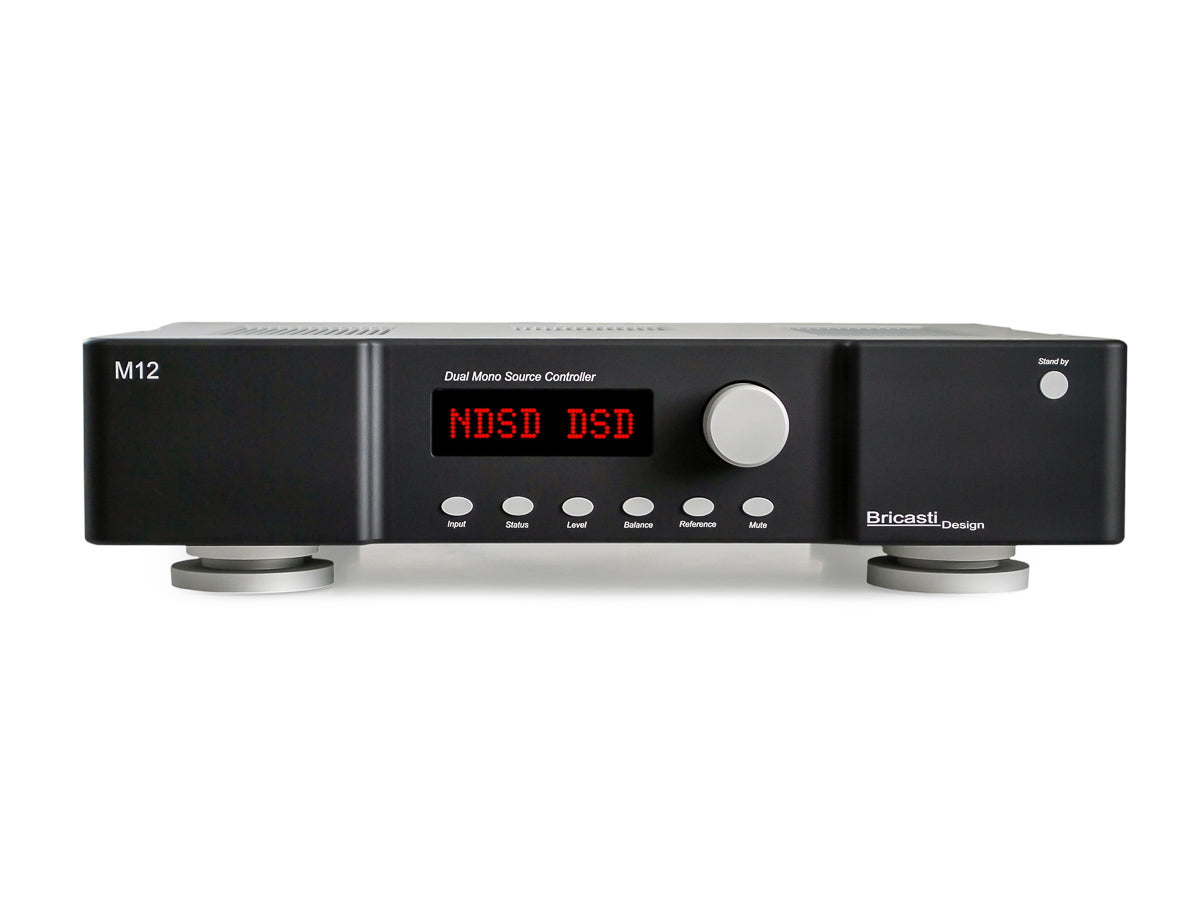
M12 Source Controller
$16,500.00 USDFeatures
Pure analog DSD conversion path — all noise filtering and level control handled entirely in the analog domain, with zero digital signal processing
High-resolution analog gain control with 90dB of range in precise 1dB steps, fully remote-controlled and programmable
Digitally controlled, fully balanced dual mono resistor ladder volume control inserted at the DAC's I-V stage output
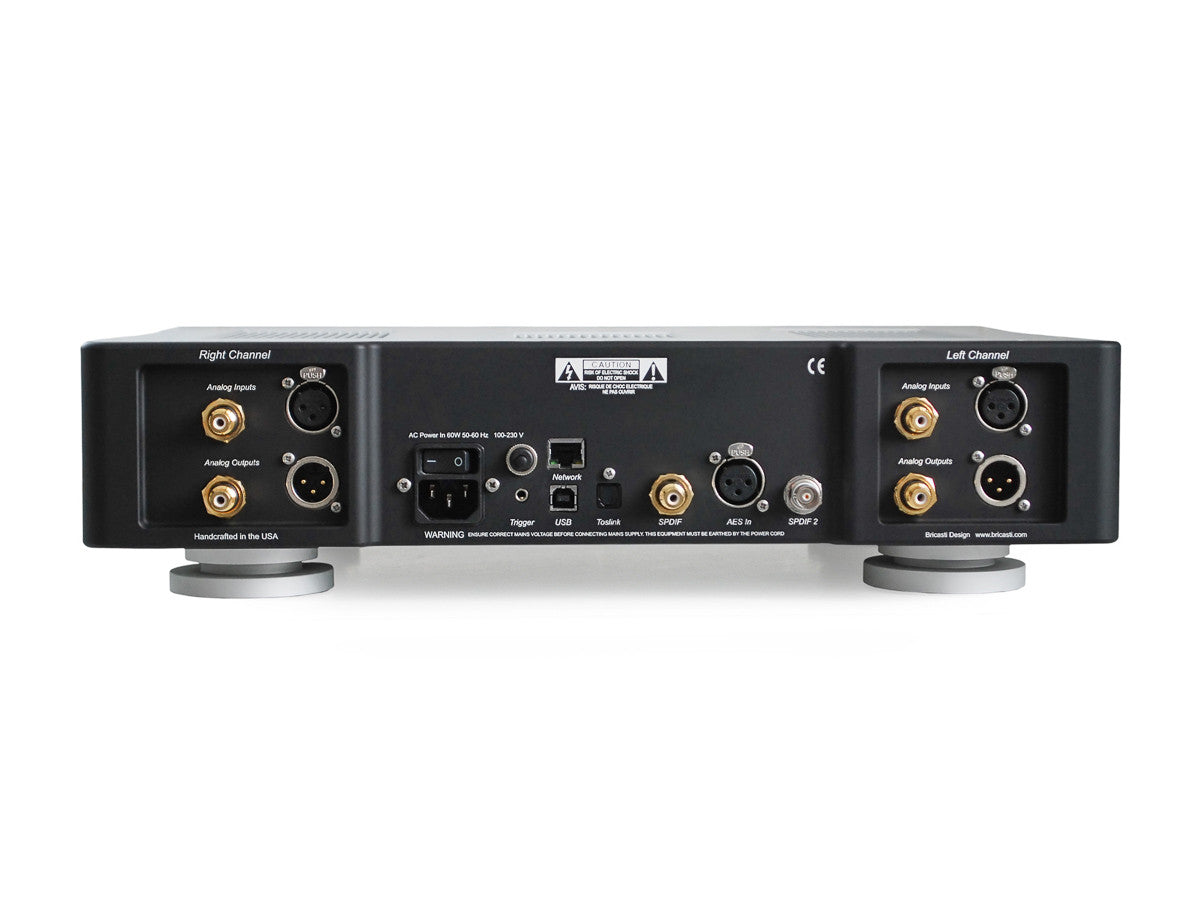
Comprehensive digital input suite: XLR (AES/EBU), BNC (S/PDIF), RCA (S/PDIF), Toslink optical, and USB 2.0
Network streaming via DLNA/UPnP media renderer over wired Ethernet — compatible with Roon, Audirvana, JPlay, and JRiver
Balanced (XLR) and unbalanced (RCA) analog pass-through inputs for seamless integration of analog sources
Supports USB sample rates up to 384kHz and native DSD 64/128/256fs (DoP also supported)
Handcrafted in the USA in a classic Massachusetts mill facility by a team dedicated to audiophile excellence
Anodized aluminum chassis for a premium, durable finish
What's in the Box?
The Bricasti M12 is designated as a "Source Controller' rather than a standard DAC because it is engineered to serve as a high-end preamplifier that integrates both digital and analog systems. While other Bricasti models like the M1 or M21 have volume controls, the M12 is a superior preamplifier replacement due to its specific analog architecture and input versatility.
The M12 is engineered as a hub for both digital and analog sources, functioning as a state-of-the-art preamplifier and dual-path DAC.
- DAC Architecture: Features two independent DAC pathways: a native 24-bit Delta-Sigma PCM converter and a proprietary Native 1-bit DSD (NDSD) converter.
- Preamplifier Functions: Includes dedicated analog inputs (XLR and RCA) for phono stages or tape decks. Volume and muting are managed by a 90dB R2R digitally controlled analog resistor ladder to maintain signal purity.
- Native DSD Technology: Uses a 10GHz analog switch to convert DSD data directly to an analog waveform, avoiding the need for PCM conversion and steep digital filters.
- Connectivity: The LAN interface comes standard, which Bricasti identifies as the best-sounding input option due to its lower noise floor and improved accuracy compared to USB.
The following features make it a more effective preamplifier replacement:
1. Integration of Analog Inputs Unlike most high-end DACs that only accept digital signals, the M12 features dedicated analog inputs (both single-ended and balanced). This allows you to connect traditional analog sources—such as a phono stage for a turntable or a tape deck—directly into the unit. This functionality transforms the M12 from a digital converter into a comprehensive hub for an entire audio system, effectively making a standalone preamplifier redundant.
2. R2R Resistor Ladder Analog Volume Control Most DACs control volume in the digital domain, which can often result in a loss of resolution. The M12 utilizes a fully analog R2R digitally controlled resistor ladder for level adjustment.
Precision: It offers a 90 dB range of adjustment in precise 1 dB steps.
Purity: Bricasti argues that dumping the analog voltage output of the DAC directly onto an analog volume control leads to the cleanest sound possible by maintaining short signal paths and avoiding digital processing of the volume.
3. Native DSD Management in the Analog Domain A unique challenge of DSD is that it cannot be processed digitally (for volume or muting) without being converted to PCM. The M12 solves this by performing all mutes, fades, and level controls for DSD in the analog domain using its resistor ladder. This ensures that the DSD signal remains pure single-bit from conversion to the analog output, providing a level of transparency that standard digital preamps cannot achieve.
4. Robust Analog Output Stage
The M12 is built with a fully balanced, dual-mono architecture featuring isolated power supplies for each channel. Its output stage is designed to be robust enough to drive power amplifiers directly with "Tonal honesty" and "Laser-focused resolution." By removing a third-party preamplifier, you eliminate extra circuitry and cables, which Bricasti suggests results in a more mellow and dimensional sound.
5. Seamless Transitions
The M12's analog section is designed to manage transitions between different sources—digital or analog—and various sample rates seamlessly. It uses a Sharc DSP to control these analog processes, ensuring that there are no pops or noises when switching tracks or inputs, which is a hallmark of a well-engineered dedicated preamplifier.
The 10GHz analog switch is a critical component of the Bricasti M12's Native DSD (NDSD) conversion path. It was specifically implemented to overcome a common industry challenge: most DSD converters are forced to convert the signal to PCM to perform basic functions like volume adjustment or muting, which compromises the purity of the single-bit stream.
Key details regarding this switch and its role in the M12 include:
- Direct Waveform Creation: The 10GHz analog switch is used to convert the DSD digital data stream’s one-bit pulses directly into an analog waveform. This high-speed switching allows the
- M12 to bypass the typical "Sigma Delta" approach used by many other manufacturers that converts DSD to multi-bit PCM for processing.
- Analog Signal Management: Because DSD cannot be digitally processed without "messing with" the signal, the M12 relies on this switch for conversion and then manages all level controls, mutes, and fades in the analog domain using a 90dB R2R digitally controlled resistor ladder.
- Ultrasonic Noise Handling: After the switch creates the analog waveform, the M12 applies a gentle analog low-pass filter to counter the ultrasonic noise inherent to DSD (which begins at approximately 24kHz). This analog filtering is described as being more "benign" than the steep digital reconstruction filters required for PCM playback.
- Sonic Purity: By using this ultra-high-speed switch for direct conversion, the M12 maintains a pure, native single-bit signal from the digital source all the way to the analog output. This results in what Bricasti describes as a superior representation of time domain information, which enhances the sense of spaciousness and natural acoustics in DSD recordings.
In short, the 10GHz switch is the "engine" of the M12 native DSD path, enabling the unit to treat DSD as a pure one-bit signal rather than an intermediate step toward PCM conversion.
Feature
M1 Series II
M11 Classic
M12 Source Controller
M21 Flagship
Primary DAC Type
Delta-Sigma (Chip)
R2R Ladder (Discrete)
Dual: Delta-Sigma & NDSD
Triple: Delta-Sigma, R2R, & NDSD
Preamplifier Capabilities
Digital Volume
Digital Volume
Full Analog Preamp (includes analog inputs)
Analog Volume
DSD Playback
Standard DSD
DSD support via R2R/DDS
Native 1-bit (10GHz switch)
Native 1-bit (10GHz switch)
Filtering Options
8 Settings
4 Settings
Custom Bricasti filters
Path-specific filters
Streamer (LAN)
Optional card
Optional card
Included as standard
Included as standard
Clocking
Dual-mono
DDS (No external link)
MDX Digital processing
DDS (per channel)
Positioning
Boutique Versatility
Pure R2R engagement
Integrated system hub
Ultimate reference flagship
Bricasti M12 vs M21
The Bricasti M12 Source Controller and the M21 DAC share a similar design philosophy and several core technologies, but they are distinguished by their specific DAC pathways and their primary intended functions within an audio system.
DAC Architecture and Pathways
The most significant technical difference between the two units is the number of independent DAC circuits available:
- M12 (Two Pathways): The M12 features two independent DAC sections: a native Delta-Sigma PCM converter (utilizing Analog Devices chips) and a proprietary native 1-bit DSD converter.
- M21 (Three Pathways): The M21 is described as a "Swiss Army knife" because it adds a third pathway: a discrete 20-bit R2R Ladder DAC. This allows M21 users to choose between the punchy dynamics of Delta-Sigma or the "supple", analog-like timing of the R2R ladder for PCM playback, an option not present on the M12.
The Native DSD (NDSD) Implementation
Bricasti explains that the M12 was designed to solve a historical problem: most DSD converters actually convert the signal to PCM to perform basic functions like volume control or muting.
- Pure 1-Bit Conversion: Both the M12 and M21 utilize a native 1-bit DSD path that avoids PCM conversion entirely and is the purist approach.
- 10GHz Analog Switch: The M12 uses a very high-speed 10GHz analog switch to convert the DSD data stream directly into an analog waveform.
- Analog Management: Because DSD cannot be processed digitally (to change levels or mute) without being "messed with", the M12 utilizes a 90dB R2R digitally controlled analog resistor ladder to manage mutes, fades, and volume in the analog domain. This ensures that the DSD signal remains "pure" from the source to the output.
Functional Positioning: "Source Controller" vs. DAC
While both units can drive a power amplifier directly, their roles differ slightly:
- M12 as a Hub: The M12 is marketed as a Source Controller designed to integrate both digital and analog sources. It includes an extra set of analog inputs (for a phono stage or tape deck), making it a more comprehensive replacement for a traditional preamplifier.
- M21 as a Flagship DAC: The M21 is positioned as the flagship digital-to-analog converter, focusing on providing the user with every possible conversion technology (Delta-Sigma, R2R, and NDSD) in one chassis.
Sonic Characteristics and Performance
- M12 Sound: Reviewers note the M12 offers "tonal honesty" and "laser-focused resolution." When using the LAN interface, the sound is described as "leaner" and more accurate compared to USB, lifting "veils" to reveal deeper spatial cues and minute tonal inflections.
- M21 Sound: The M21 is praised for its three-dimensional spaciousness and "organic realism." Its R2R ladder DAC is specifically noted for its superior portrayal of natural reverb and decay compared to the Delta-Sigma path.
Physical Options and Pricing
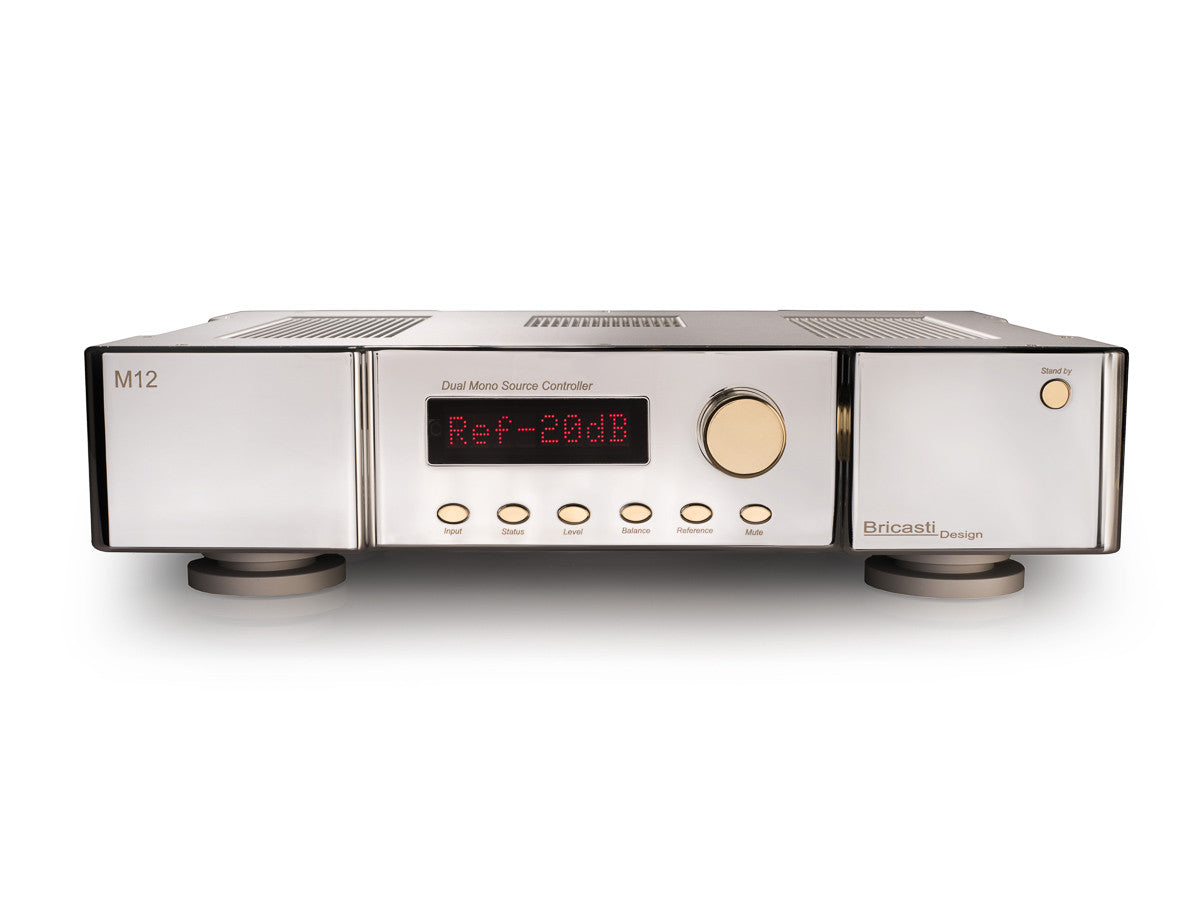
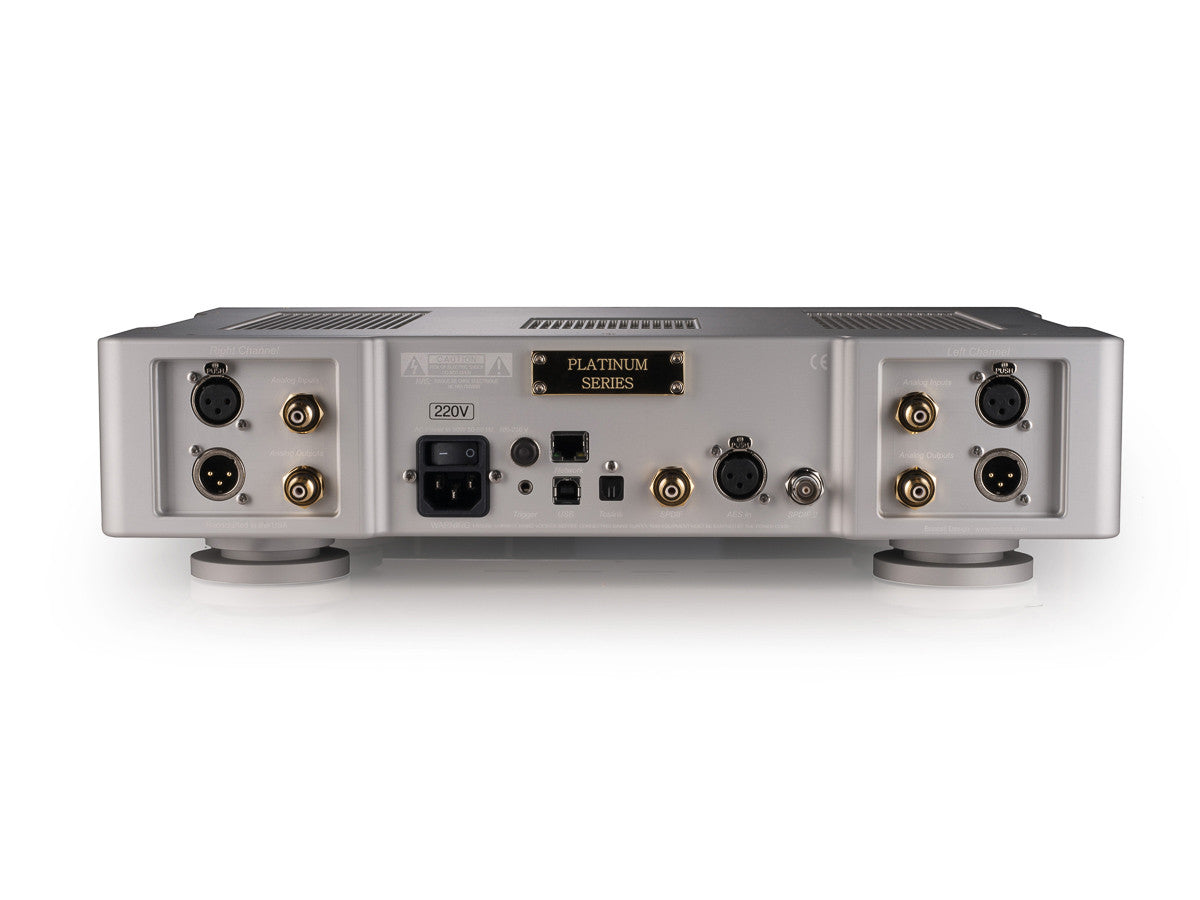
Both units are available in "Platinum" editions, which feature noble metal finishes (nickel or platinum) that Bricasti claims actually improve the sound, making it more mellow and dimensional.
- The M12 is priced at approximately $16,500.
- The M21 is priced at approximately $16,500.
- The M12 Platinum is priced at approximately $19,000.
- The M21 Platinum is priced at approximately $19,000.
The Bricasti M12 and M21 overcome the historical limitations of DSD playback by utilizing a proprietary hardware architecture that avoids converting the 1-bit signal into PCM for processing. This is achieved through high-speed switching and managing all necessary signal adjustments—like volume and muting—in the analog domain.
Historical Limitations of DSD
Historically, 1-bit encoding (DSD) faced two primary hurdles:
- Noise and Distortion: Early attempts at direct DSD conversion were prone to high noise and poor distortion levels.
- Inability to Process Digital Signals: It is technically impossible to perform digital signal processing (DSP) functions, such as changing volume levels or muting a signal, directly on a 1-bit data stream.
To solve these issues, most industry converters use a Sigma-Delta technique, which converts the 1-bit DSD stream into multi-bit PCM to perform these functions before converting it back to analog. Bricasti designers argue this "messes with" the signal, requiring steep digital reconstruction filters that can degrade the sonic purity.
Bricasti's Solution: The Native 1-Bit Path
To achieve true native playback, the M12 and M21 employ a dedicated Native DSD (NDSD) path that keeps the 1-bit signal intact from the source to the final analog stage:
- 10GHz Analog Switch: Instead of a digital chip, the units use a very high-speed 10GHz analog switch to convert the DSD digital pulses directly into an analog waveform.
- Analog Signal Management: To handle volume control and muting without digital processing, Bricasti integrated a 90dB R2R digitally controlled analog resistor ladder. This allows the device to manage mutes, fades, and level adjustments entirely in the analog domain.
- DSP-Controlled Analog Logic: While a Sharc DSP is used, it does not process the musical bits; instead, it manages the timing of the analog switches and mutes to ensure seamless transitions between tracks or sample rates without generating noise.
- Gentle Analog Filtering: Because they avoid PCM conversion, these units do not require steep digital filters. Instead, they use a gentle, low-order analog low-pass filter to counter ultrasonic noise, which is considered more benign and musically natural.
Sonic Results
By overcoming these processing limitations, the M12 and M21 focus on the time-domain information of DSD, which Bricasti identifies as its "real magic". This approach results in a highly transparent sound that excels at portraying natural acoustics and three-dimensional soundstage accuracy.
FAQ
What is a source controller?
The M12 Source Controller has 2 completely isolated fully differential channels, each with its own dedicated linear power supply, D/A converter, DDS clocking, and analog level control circuitry. This design ensures that analog crosstalk is virtually nonexistent, that the necessary power requirements for each channel are well met and isolated from each other and the digital processing is isolated, having its own power supply. With Bricasti's twin DAC design, the dynamic range for each channel is optimized by using the stereo ADI 1955 D/A converter in a mono configuration for PCM conversion, clocking is for each channel done directly at each DAC with a technique called DDS (direct digital synthesis) which takes clock induced jitter to immeasurable levels, and DSD is converted with their own one-bit analog converter.
Does the M12 come with a remote control?
Yes, the M12 Source Controller comes packaged with a remote in the box.
What is the M12 made out of?
The M12 is robustly constructed of milled and CNC machined aluminum sections, no typical bent metal chassis, and a top cover found on most products. All sections of the construction, the front and rear panels, the sides, and even the bottom and top plates start out as solid blocks of aluminum which are precision machined to shape, with exact tolerances for a perfect fit. These parts are then anodized and the text and markings are laser-etched for a clean and enduring look. Made with the same attention to detail as the rest of the M lineup (like the Bricasti M1). Available in an M12 Platinum version as well.
How does the M12 sound?
The intention of the M12 is to provide a state-of-the-art listening experience, utilizing the best designs and materials that can be found today. The converter and following analog stages are a very critical part of the digital and analog audio chain, the sound of the M12 is intended to be transparent and revealing, and fully dynamic. This in part is made possible by lowering the jitter to extremely low levels, providing a pure digital signal chain without sample rate converters, superior digital filter design, pure DSD conversion, coupled to a fast transparent analog signal path with an R2R level control, discreet analog output section and plenty of good clean linear power for optimum analog performance.
The comparison between the Bricasti M11 R-2R Classic and the M1 Series II centers primarily on their differing digital-to-analog conversion technologies and the resulting sonic character and customization options.
1. DAC Architecture
- M11 (Discrete R2R): The M11 utilizes a discrete 20-bit R2R ladder DAC. This circuit was adapted from an industrial-grade DAC not originally intended for audio, which Bricasti engineers built into a specialized environment to achieve high-fidelity musical playback.
- M1 Series II (Delta-Sigma Chip): The M1 Series II is a chip-based DAC. It uses a dual-mono configuration of the Analog Devices ADI 1955 24-bit chipset.
2. Sonic Performance
- M11 Character: The R2R design of the M11 prioritizes timing and musical engagement over pure technical specifications. It is described as having a "supple" and articulate sound that delivers musical power without "hard digital edges." It excels at portraying the "roundness" of notes, including natural attack, tonal color, and decay.
- M1 Series II Character: Despite being chip-based, the M1 Series II is noted for its ability to remove "electronic tension" and sound remarkably analog—comparable to a ladder DAC. It offers a clean, straightforward resolution that makes vocals feel effortless and centered, often appearing "a step in front of the speakers"
3. Filtering and Customization
- M11: This unit offers four filter options: two linear phase and two minimum phase. While the differences are audible, they are described as subtle refinements to the overall presentation.
- M1 Series II: This unit features a more extensive filtering system with eight different settings. These filters allow for significant sonic tweaking, ranging from "clean and articulate" (settings 0–1) to "rich and warm" (settings 4–5), or "very detailed" (setting 8). This makes the M1 Series II more versatile for matching with various speakers and systems.
4. Price and Positioning
- M11: Positioned as Bricasti's least expensive R2R DAC, it contains the core elements of the ladder DAC found in the flagship M21. It is priced at approximately half the cost of the M21, making it a "bargain" for those who specifically prefer the R2R sound.
- M1 Series II: This model is priced higher, at $12,500 (or $13,500 with the network card). It is marketed as a high-quality "boutique" option for listeners who want the versatility of a preamp, DAC, and streamer in one unit without reaching the extreme price points of the flagship series.
5. Key Design Differences
- Clocking: The M11 emphasizes superior onboard clocking (Direct Digital Synthesis), which Bricasti considers more critical for ladder DACs; consequently, it does not offer an external clock link.
- Form Factor: Both units share the classic Bricasti aesthetic of machined aluminum. However, the M11 is described as a slim unit, whereas the Series II updates maintain the dual-mono architecture with separate power and analog circuits for each channel.
Bricasti DAC Comparison: A Tale of Four DACs (M1, M11, M12, M21)
Read Time: Approx. 10 min.

TL;DR:
- High-Energy Listener → M1 Series 2 ($12,500): Delta-Sigma chip DAC with dual-mono architecture delivers punchy dynamics and tight bass without digital fatigue, plus 8 filter settings for customization.
- Analog Purist → M11 Series 2 ($12,500): Discrete R2R Ladder DAC prioritizes natural timing, decay, and three-dimensional space — built for jazz, classical, and acoustic recordings.
- System Architect → M12 Source Controller ($16,500): A full preamp replacement with analog volume control and native 1-bit DSD conversion for the purest possible signal path.
- Uncompromising Audiophile → M21 Flagship ($16,500): Combines all three conversion technologies (Delta-Sigma, R2R Ladder, and native DSD) in one chassis for total sonic flexibility.
- Bottom line: No single DAC architecture is objectively "better" — the right choice depends on your music genre, listening priorities, and system goals.
Choose Your Architecture: Why One Size Doesn't Fit All at Bricasti
Thinking that all high-end digital-to-analog converters (DACs) sound exactly the same just because they process digital 1s and 0s is a fundamental misunderstanding of digital audio. The physical architecture of a DAC, whether it uses a mass-produced microchip or a discrete array of physical resistors, completely changes the emotional presentation of your music. And when you look at a brand like Bricasti, who builds world-class DACs with entirely different internal architectures, this becomes incredibly obvious.
If you spend thousands of dollars on a flagship DAC without matching its internal conversion technology to your specific music taste, you'll likely end up with an analytical, fatiguing sound when what you really want is a warm, analog, realistic presentation. We're breaking down Bricasti's lineup based on the four types of listeners, from the high-energy M1 Series II, the analog purist M11, the minimalist M12 Source Controller, and the uncompromising M21 flagship, so you know exactly what technology belongs in your system.
Four Listeners, Four Conversion Technologies
The Hard Truth: When people start looking at high-end DACs, they immediately get overwhelmed by spec sheets, sample rates, and engineering jargon. But the truth is, the only thing that actually matters is how the physical engineering inside the metal box translates to the music hitting your ears. Bricasti is a fascinating hi-fi company. Instead of just building one type of DAC and forcing you to accept their specific house sound, they have engineered entirely different conversion technologies to suit different types of listeners.
To determine which Bricasti DAC is right for your signal chain, you have to ask yourself one question: "What kind of listener am I?" There are four types of listeners most audiophiles fall into, and while you can fall into more than one category, typically you'll find yourself gravitating to one over the other.
The High-Energy Listener
If your record collection is filled with Rock n' Roll, heavy Electronica, or modern Pop, the best system for you is one that hits hard and supports those genres. You want punchy dynamics, energetic transients, and bass that is incredibly tight and controlled.
If that describes you, consider the Bricasti M1 Series II DAC.
At $12,500, the M1 Series II utilizes a Delta-Sigma architecture (ADI 1955), a circuit characterized by a presentation that offers slightly more bass and dynamic energy. Chip-based DACs are famous in the high-end audio world for their analog precision. They are incredibly fast and have an undeniable grip on the low-end frequencies. When you listen to a kick drum or a snare drum through the M1, the system hits with a visceral, well-defined impact that is completely free of any artificial muddy bloom.
But here's where Bricasti's engineering brilliance comes in. Many mass-produced chip DACs can sound harsh, glaring, or fatiguing over long listening sessions. This is commonly referred to as electronic tension. Bricasti implements the Delta-Sigma chip in a true dual-mono architecture, with entirely separate power and analog circuits for the left and right channels. This extreme isolation strips away any digital tension present.
The M1 sounds remarkably analog for a chip-based DAC. Vocals are centered and effortless, floating a step in front of the speakers. On top of that, the M1 Series II is highly customizable. It features an 8-setting filter system built directly into the DAC's software. If a track sounds a little too analytical, you can easily adjust that and change the filter to add a rich, warm layer to complex mixes. Or you can open it up for maximum straightforward resolution. The M1 Series II is the ultimate DAC for the listener who wants thrilling dynamics, but refuses to sacrifice a smooth musical soul.
M1 Series II at a Glance
- High-quality, chip-based DAC designed for listeners seeking significant versatility in sonic tuning
- True dual-mono design with Analog Devices ADI 1955 24-bit DAC chipset
- Remarkably analog sound quality with effortless imaging, three-dimensionality, tight bass, and a fluid, natural playback
- An extensive 8-setting filtering system
- Preamplifier capability with a high-quality volume control
- Wide input array with an optional network card upgrade
Delta-Sigma DAC at a Glance:
- Bass response and dynamic energy with more detail and resolution in higher frequency ranges
- Analog-like smoothness
- Effortless, three-dimensional imaging
- Highly customizable sonic profile
- The preferred choice for high-energy music genres
The Analog Purist
If your collection is built around acoustical jazz, classical symphonies, and intimate vocal performances, and you aren't looking for punchy aggression, you are an analog purist. You value natural realism, fluid timing, and a massive three-dimensional soundstage.
If that describes you, your perfect match is the Bricasti M11 Series 2 R2R DAC.
At $12,500, the M11 throws out the microchip entirely and instead uses a discrete R2R Ladder DAC. Imagine a physical ladder made up of dozens of microscopic, highly precise resistors. The digital signal climbs that physical ladder, and the resistors manually convert the digital data into an analog voltage. Building a discrete ladder DAC is not an easy task. It's incredibly difficult and expensive, but the sonic reward is worth every painstaking hour and penny.
Ladder DACs prioritize musical timing over everything else. In the real world, when a pianist strikes a key or a drummer hits a cymbal, the sound has a very specific natural attack and a long, beautiful decay. A high-quality, capable DAC can capture those tiny details and nuances. As the sound waves bounce around the room, the M11 captures the natural decay and venue reverb better than almost any chip-based DAC on the market. It provides a sound quality that's subtle, articulate, and deeply engaging. The distinct roundness of individual notes is reproduced, giving acoustic instruments a physical weight and a presence in your room.
If you want digital files to sound as close to a high-end turntable as physically possible, the R2R ladder DAC inside the M11 is exactly what you need.
M11 Series II at a Glance
- Focused R2R Ladder DAC that serves as a more affordable entry point to Bricasti's discrete R2R conversion technology
- Discrete 20-bit R2R Ladder DAC with a direct digital synthesis (DDS) clocking system to reduce jitter to immeasurable levels
- Prioritizes timing and musical engagement over technical specifications, described as supple, articulate, and neutral
- Four filter options for subtle sonic refinement
Ladder (R2R) DAC at a Glance:
- Highly natural, analog-like sound with excellent timing and musical engagement
- Accurately portrays the distinct roundness of individual notes
- Excellent portrayal of three-dimensional space and natural venue reverb
- Sound can be suitably tailored using built-in filters
- The preferred choice for acoustic, classical, and jazz recordings
The System Architect
The system architect is the minimalist listener. The person who wants the absolute cleanest, purest signal path possible without stacking five different components in their audio rack.
If you want a device that can act as the brain of your entire system, the Bricasti M12 Source Controller is your perfect companion.
At $16,500, the M12 isn't just a DAC. It's a complete preamplifier replacement. Normally, if you plug a DAC directly into a power amplifier and use the DAC's digital volume control, you actually lose audio resolution as you turn the volume down. The music gets quieter, but it also gets thinner and less detailed. The M12 solves this by using a fully analog resistor ladder purely for the volume control. The volume is adjusted in the analog domain, allowing you to turn it down to a whisper-quiet level and keep 100% of your musical resolution intact.
The M12 features a full suite of traditional analog inputs on the back panel, enabling you to plug in your turntable's phono stage or your tape deck directly into the M12, and you're completely eliminating the need for a separate preamplifier. By removing that extra component and those additional cables, you eliminate the danger of double preamping and keep your signal path remarkably pure.
But Bricasti didn't stop there. The M12 also has a secret weapon for high-resolution audio fans–a native 1-bit DSD converter. DSD is an ultra-high-resolution format used on Super Audio CDs (SACDs). The problem is, most DACs on the market cannot change the volume of a DSD file without first converting it to a lower-quality format. This ruins the purity of the file. The M12 uses a proprietary high-speed analog switch to convert the DSD stream directly into an analog waveform, completely bypassing any digital manipulation. It's the absolute purest approach to high-resolution playback, delivering laser-focused resolution and tonal honesty.
M12 at a Glance
- Designated Source Controller designed to integrate both digital and analog sources
- Two independent DAC sections (a native Delta-Sigma PCM converter and a proprietary native 1-bit DSD converter)
- Fully balanced, dual-mono architecture with isolated power supplies for each channel
- Native DSD technology using a 10GHz analog switch for phono stages or tape deck.
- Dedicated analog inputs (both single-ended and balanced)
- Tonal honesty and laser-focused resolution that lifts the veil to reveal deeper spatial cues and minute tonal inflections
Native 1-bit DSD Path at a Glance:
- Natural and smooth highs
- Realistic imaging, capturing minute details and the weight and physical presence of instruments
- Three-dimensional spaciousness that mimics the acoustics of a live concert venue
- Textural accuracy
- Delivers the most transparent, spacious, and texturally rich experience possible from DSD sources
The Uncompromising Audiophile
The uncompromising audiophile is the listener who refuses to choose. They want the punchy dynamics of a chip DAC for their rock album, but also crave the natural 3D decay of a ladder DAC for their jazz albums, and the pure transparency of native DSD for their high-res files.
For this listener, there is only one clear answer–the flagship Bricasti M21 DAC.
At $16,500, the M21 is the ultimate digital Swiss Army Knife. It houses all three technologies under one hood: a 24-bit Delta-Sigma DAC (utilizing the Analog Devices 1955 chips), a 20-bit R2R Ladder DAC, and a proprietary 1-bit native DSD Converter. You can seamlessly switch between these physical architectures using the menu on the front panel. It's that simple.
In the context of the M21, the Linear-1 filter acts as the tool for the "critical listener" to optimize the DAC's performance, particularly when playing Redbook CDs or high-resolution PCM streams. It complements the Ladder DAC's inherent ability to capture minute details with organic realism and a natural reproduction that avoids "artificial digital airiness." While the Ladder DAC itself is praised for its natural, analog-like timing and three-dimensional spatial portrayal, the selection of filters allows you to tailor these characteristics to your personal taste.
With the M21, you're essentially getting three world-class, distinctly different-sounding DACs inside one beautifully machined aluminum chassis. The M21 offers a sense of sheer spaciousness and organic realism that's simply breathtaking. If you want absolute, uncompromising control over exactly how your digital library sounds, the M21 is the peak of the mountain.
M21 at a Glance:
- Flagship DAC providing the user with every possible conversion technology in one chassis
- Three independent DAC pathways (a discrete 20-bit R2R ladder DAC, a 1-bit native DSD converter, and a 24-bit Delta-Sigma DAC)
- Flexibility to choose between punchy dynamics or supple analog-like timing
- Native 1-bit DSD path that avoids PCM conversion entirely for sonic purity
- Three-dimensional spaciousness and organic realism
Linear 1-Filter at a Glance:
- More open midrange, enhancing clarity and presence of vocals and acoustic instruments
- Enhanced bass response, adding to the overall texture and impact of the low-end
- Personalized tuning, allowing listeners to find the specific setting that best suits their individual system and music preferences
The Bricasti Four: Side-by-Side Specs
M1 Series II
M11 Classic
M12 Source Controller
M21 Flagship
Primary DAC Type
Delta-Sigma (Chip)
R2R Ladder (Discrete)
Dual: Delta-Sigma & NDSD
Triple: Delta-Sigma, R2R, & NDSD
Preamplifier Capabilities
Digital Volume
Digital Volume
Full Analog Preamp (includes analog inputs)
Analog Volume
DSD Playback
Standard DSD
DSD support via R2R/DDS
Native 1-bit (10GHz switch)
Native 1-bit (10GHz switch)
Filtering Options
8 Settings
4 Settings
Custom Bricasti filters
Path-specific filters
Streamer (LAN)
Optional card
Optional card
Included as standard
Included as standard
Clocking
Dual-mono
DDS (No external link)
MDX Digital processing
DDS (per channel)
Positioning
Boutique Versatility
Pure R2R engagement
Integrated system hub
Ultimate reference flagship
Dragon Cables
[Silver Dragon Network Cable, Silver Dragon Premium USB Cable, Bronze Dragon Power Cable, Silver Dragon Premium Interconnect Cable]
There are a lot of reasons why you need to make sure your audio cables are not afterthoughts.
Our HiFi Audio Dragon Cables bring out more of what you love in your music and audio gear. If you love your headphones but wish they had a bit more top-end sparkle - a Silver Dragon Headphone Cable would be a great option. If your USB cables keep dying - as many stock cables do - then check out our quality USB Audio Cables. We say time and time again that materials matter, and our audio cables and custom geometries actually help to bring out those desired properties in your gear and music. We make tons of custom options for our customers so that you can get the right HiFi Audio cable for your exact needs. If you have any questions feel free to Contact Us and we'll be more than happy to help.

Generally, stock audio cables are manufactured with subpar materials, metals with impurities, poor geometries, and an overabundance of layers to make them look and feel like a fire hose. Inconsistency and lack of quality control in stock cables can lead to poor sound quality and a veiled sound vs. what the musician intended for you to hear and feel from the music. Dragon Audio Cables are handcrafted with the highest standards and made to order according to your specific needs. At Moon Audio, we create a custom cable for you using the highest quality UP-OCC silver or copper conductors that can be manufactured. UP-OCC metals are void of impurities and are optimized for signal transfer and sound quality. We have one of the largest collections of audio and headphone connection options available online and we create limitless audio cable options depending on your specific gear and needs.
Why Dragon Cables?
You’ve heard the saying that a chain is only as strong as its weakest link, right? Well, the same applies to your brand new audiophile-grade headphone or other audio components. The weakest link, in this case, is your stock audio cable or the cheap interconnects the manufacturer threw in the box just to get you up and running. Why is the audio cable always an afterthought, when it’s just as important as the rest of your system? At Moon Audio, we use the purest and best raw materials in our cables to unveil your music. We believe that materials matter and your audio cables should have the same care and craftsmanship that manufacturers put into their audio components and headphones. Audio cables are ultimately the connection to your music. The fact remains that cabling is often considered the last priority to that of the main product and a means to cut down the overall production costs. It’s as simple as that. Dragon Cables elevate every note - as if you were hearing your favorite music for the very first time.
Verdict
In the vast sea of high-end DACs, determining which one is right for you can feel like trying to find a needle in a haystack. For the sake of simplicity and to give you a place to start, we've grouped the most common listening characteristics into four types of listeners with a Bricasti DAC pairing for each. But the truth is, regardless of what type of listener you are, each of these DACs sounds fantastic with all genres of music.
Ultimately, the DAC you choose should be based on your sound perception–what you're trying to achieve. We all hear differently, and there truly is no right or wrong answer here. Upgrading your DAC isn't just about reading a spec sheet; it's about matching the physical engineering of the conversion process to the soul of your favorite music.
The M1 Series II's Delta-Sigma path offers punchy dynamics, while the M11 Series II's ladder DAC provides analog fluidity for PCM, and the M12's native 1-bit DSD path delivers a transparent, spacious, and texturally rich experience. And if you can't compromise on one and want them all, then the M21 is the clear choice. Bottom Line: no single DAC architecture is objectively "better"–the right choice depends on your music genre, listening priorities, and system goals. Once you determine those, the rest becomes easy.
Featured Products
Related Videos
4 American-Made DACs! Find out Which is RIGHT for You
How Bricasti Design Builds World-Class DACs & Amps Entirely In-House
DACs vs. AMPS! Why Most People Get This WRONG...

| Parameter | Specification |
|---|---|
| Digital Input Specifications | |
| Digital Inputs | XLR: AES/EBU 24-bit Single Wire BNC: SPDIF RCA: SPDIF Optical: Toslink 44.1–96kHz USB 2 |
| Sample Rates – AES, SPDIF, AUX In | 44.1kHz to 192kHz |
| Sample Rates – USB | 44.1kHz to 384kHz DSD 64fs, 128fs, 256fs – Native and DoP |
| Sample Rates – Ethernet | 44.1kHz to 384kHz DSD 128 Native |
| Jitter | 8 psec @ 48kHz / 6 psec @ 96kHz |
| Balanced Analog Output Specifications | |
| Balanced Analog Outputs | XLR Balanced (Pin 2 Hot) |
| Impedance | 40 ohms |
| Output | +16.5 dBm (5.2V RMS) @ Full Scale |
| Output Level | 90 dB in 1 dB steps |
| D/A Conversion | PCM 24-bit Delta Sigma 8x Oversampling DSD Direct 1-bit |
| Frequency Response @ 44.1kHz | 10Hz – 20kHz, +0dB / -0.2dB |
| Dynamic Range | >120dB A-Weighted |
| THD+N @ 1kHz | 0.0008% @ 0dBFS / 0.0004% @ -30dBFS |
| Unbalanced Analog Output Specifications | |
| Unbalanced Analog Outputs | RCA |
| Impedance | 40 ohms |
| Output Level | +8 dBm (2.6V RMS) @ Full Scale (Front Panel) |
| D/A Conversion | 24-bit Delta Sigma 8x Oversampling |
| Frequency Response @ 44.1kHz | 10Hz – 20kHz, -0.2dB |
| Dynamic Range | >120dB A-Weighted |
| THD+N @ 1kHz | 0.0008% @ 0dBFS / 0.0004% @ -30dBFS |
| Physical Specifications | |
| Finish | Anodized Aluminum |
| Dimensions | 17" x 12" x 4.5" |
| Weight | 15 lbs |
| Shipping Weight | 18 lbs |
| Shipping Dimensions | 22" x 17" x 7" |
| Power Specifications | |
| Mains Voltage | 100, 120, 220, 240 VAC – 50Hz to 60Hz (Factory Set) |
| Power Consumption | 28 Watts (6W Standby) |
| Trigger Out | TRS Mini Jack – Tip Ground, Sleeve 5V |
| Compliance & General Specifications | |
| EMC | Complies with: EN 55103-1, EN 55103-2, FCC Part 15 Class B |
| RoHS | Complies with: EU RoHS Directive 2002/95/EC |
| Safety | Certified to: IEC 60065, EN 55103-2 |
| Operating Temperature | 32°F to 105°F (0°C to 40°C) |
| Storage Temperature | -22°F to 167°F (-30°C to 70°C) |
| Warranty | 2 Years Parts & Labor – Non-Transferable |