

Bricasti
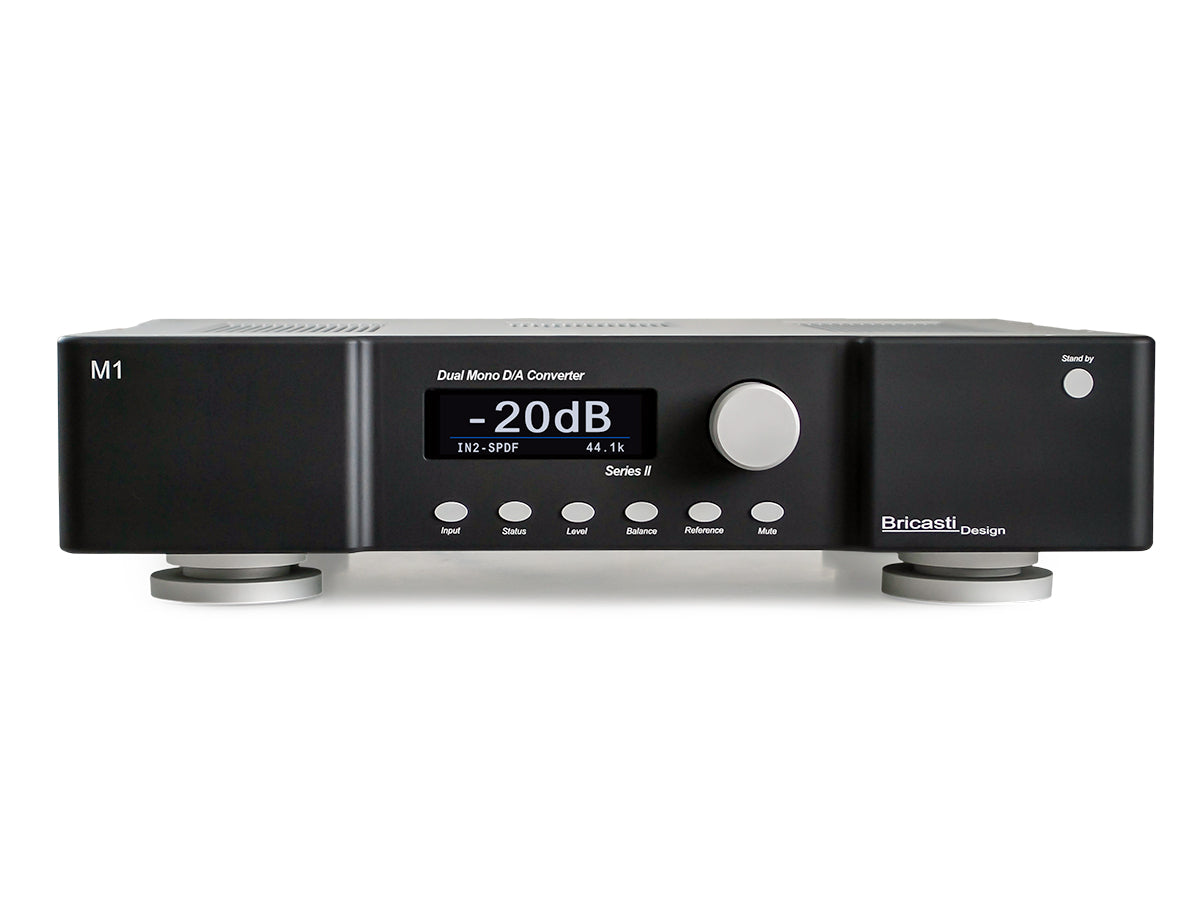
M1 Series II Digital to Analog Converter
$12,500.00 USDPay Over Time
Split your purchase into easy payments.
Fast approval with Klarna.
Select Klarna at checkout to split your purchase into smaller payments.
Features
Premium PCM 24 bit delta sigma 8x oversampling, DSD 128 Native DAC
Advanced MDx digital processor with proprietary filter technology
Ultra-low jitter (8 psec @ 48kHz) using Direct Digital Synthesis (DDS) clocking
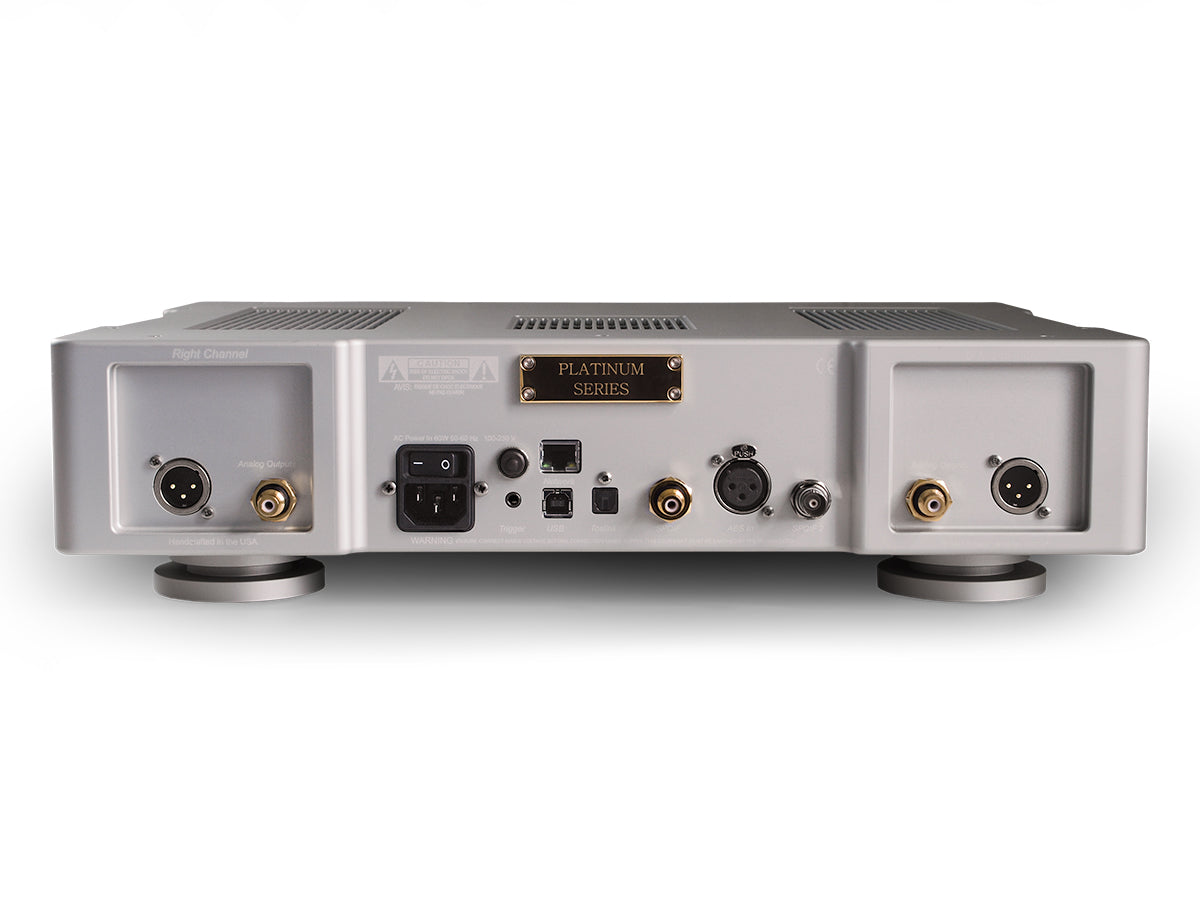
Multiple digital inputs including AES/EBU, SPDIF, Toslink, USB, and optional network player
Full DSD support up to DSD256 via USB (DSD64/128 via other inputs)
Selectable digital filters for personalized listening experience
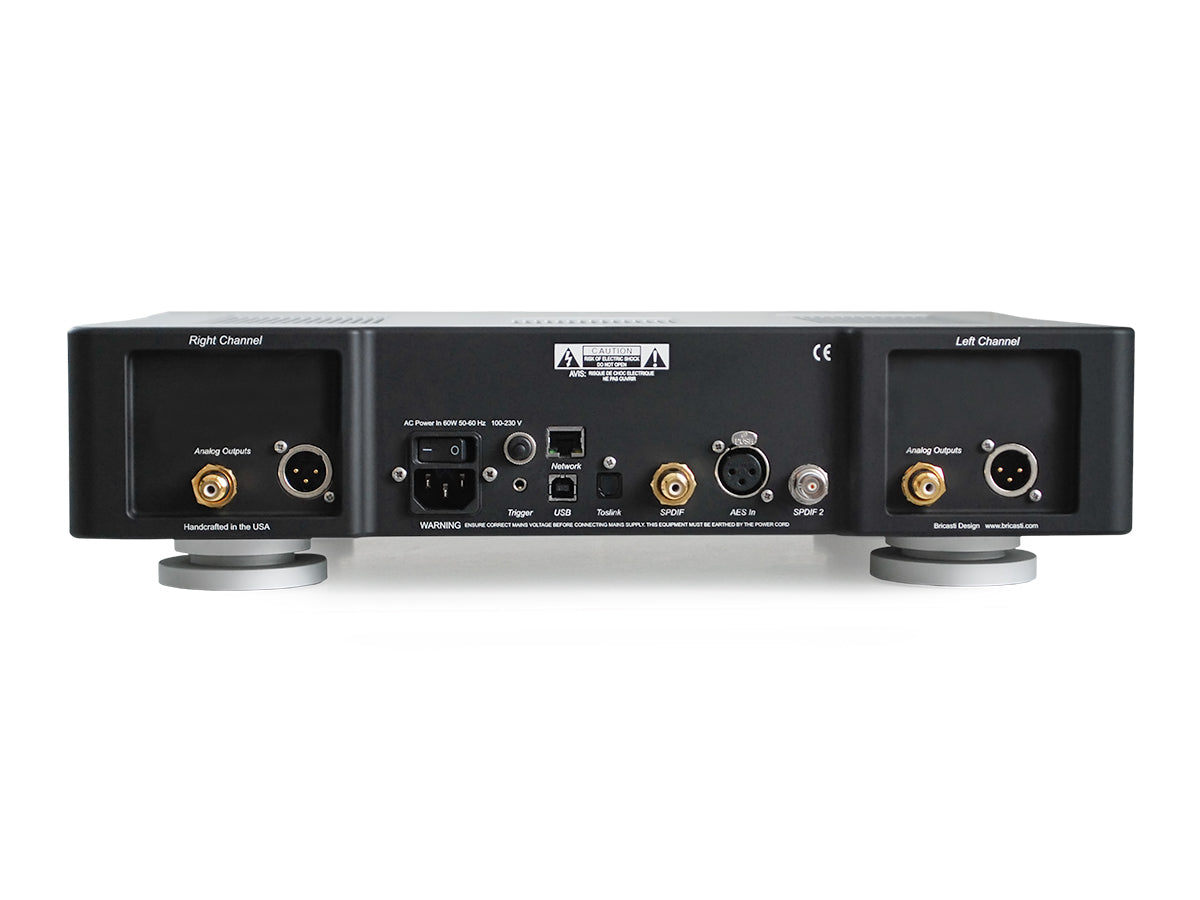
Balanced (XLR) and unbalanced (RCA) analog outputs
Handcrafted in USA with precision-machined aluminum chassis
What's in the Box?
Warranty
Model 1 Series II D/A Converter
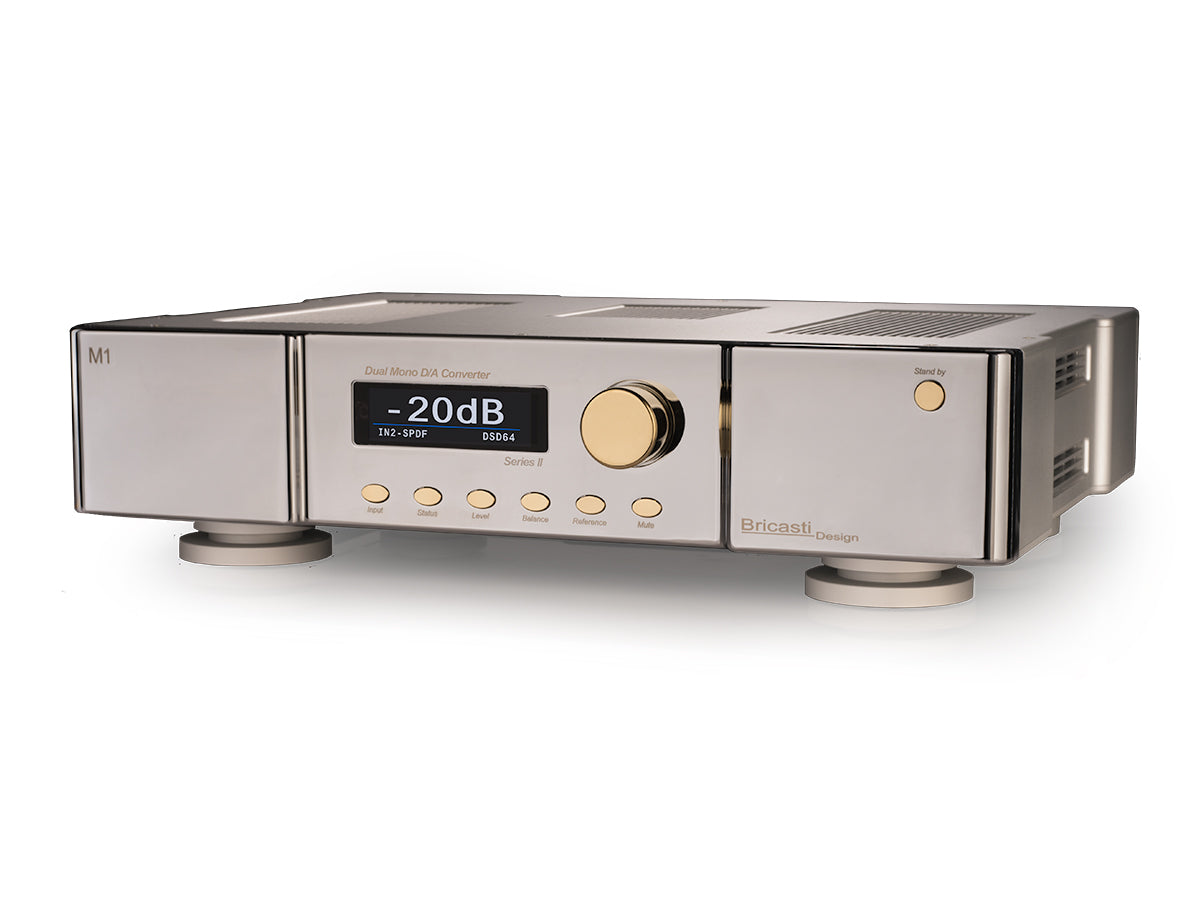
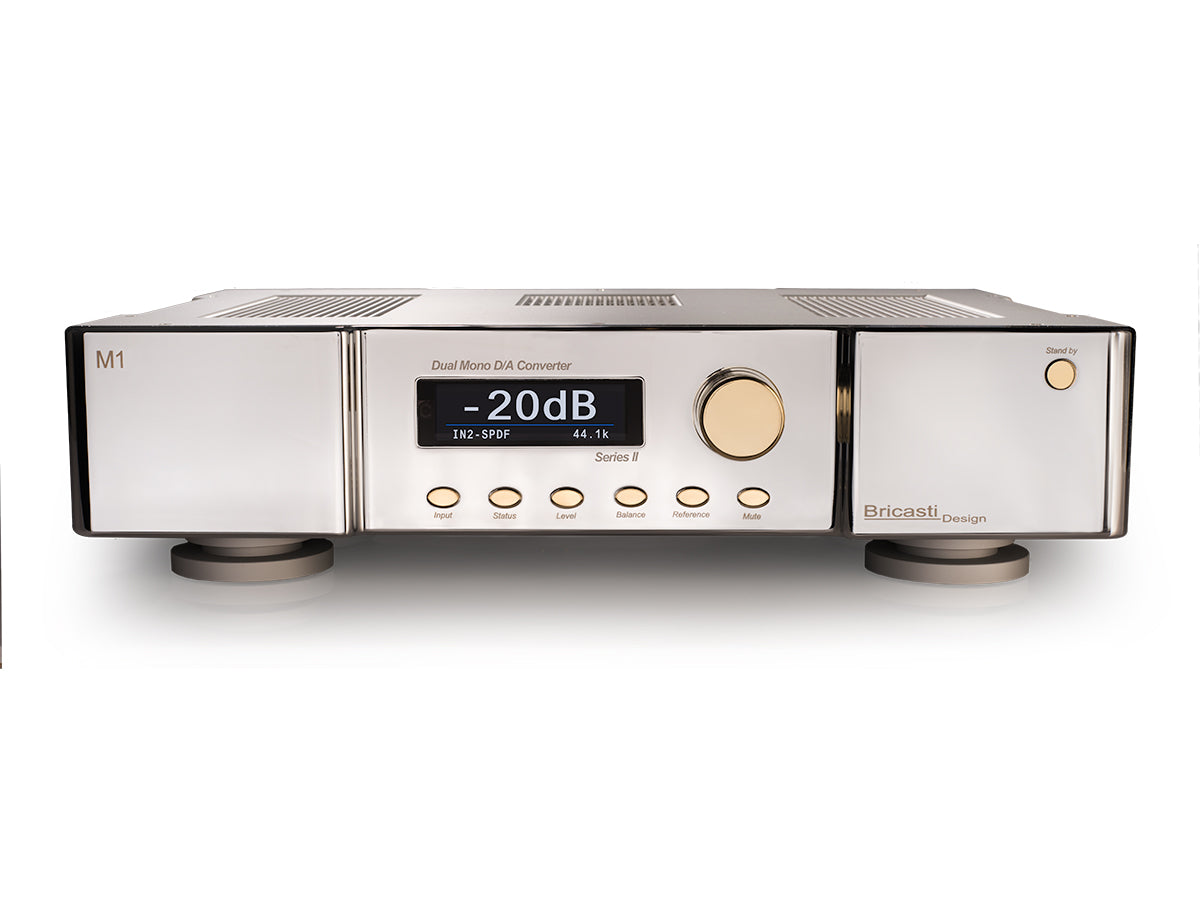
The Bricasti M1 Series II ($12,500) is a high-performance digital-to-analog converter that serves as a successor to the original M1, a unit that was a long-standing reference in the industry. Priced at $12,500 (or $13,500 with the optional network card), it is hand-built in the USA by a team of engineers with roots in Lexicon and Madrigal Labs.
Design and Build Quality
- Dual-Mono Architecture: The unit features a true dual-mono design, meaning there are entirely separate power and analog circuits for the left and right channels. This layout is intended to provide optimal stereo separation and exceptionally low crosstalk.
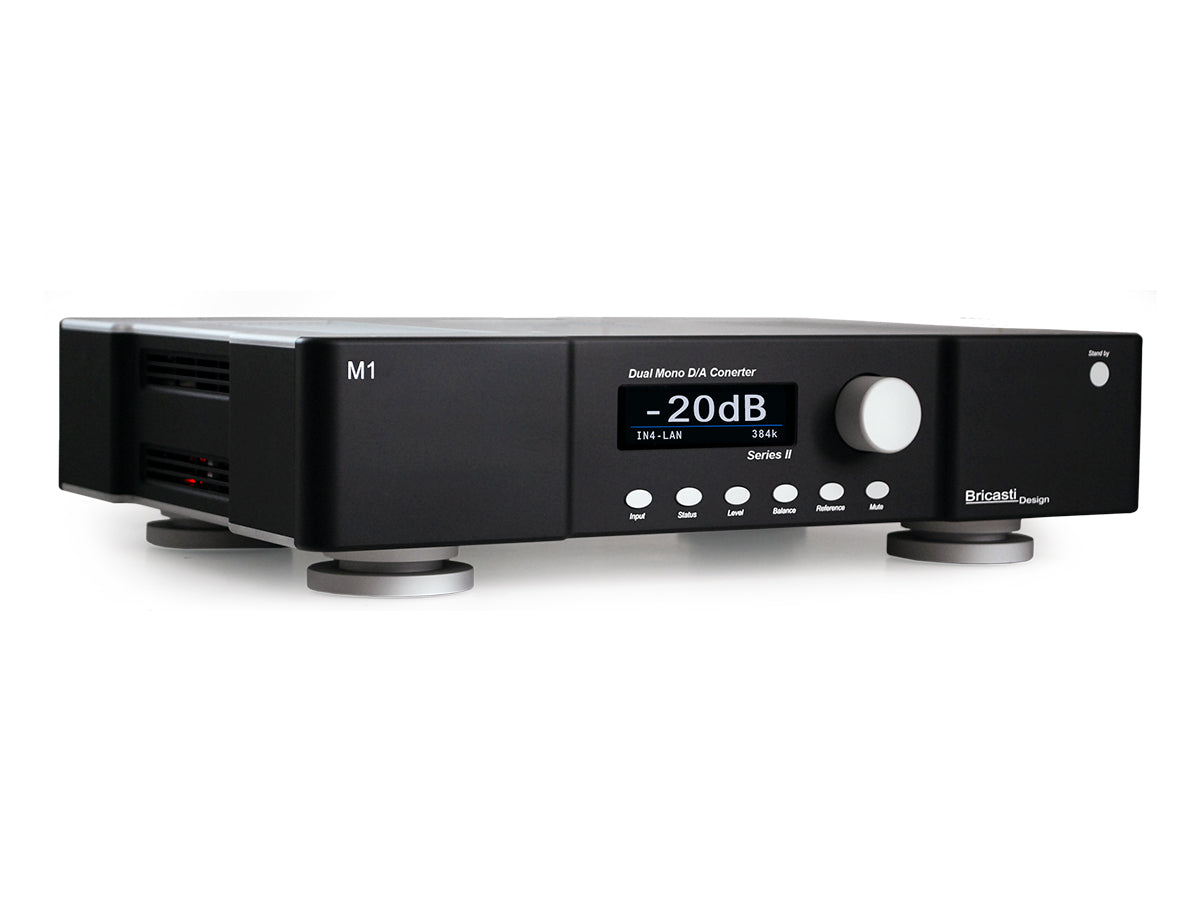
- Physical Profile: It maintains a strikingly slim and "impossibly sexy" profile compared to the larger M21 flagship. The chassis is constructed from CNC-machined aluminum blocks with no bent sheet metal, ensuring high mechanical stability.
- Preamplifier Capability: The M1 Series II includes a high-quality volume control, allowing it to serve as a digital preamplifier that can drive power amplifiers directly.
Dragon Cable Recommendations: We recommend pairing the Bricasti M1S2 with the popular Silver Dragon Interconnect. Sold in Pairs, the Silver Dragon V2 is our top-of-the-line silver conductor-based interconnect. With a braided geometry and amazing shielding, this interconnect is a remarkable solution where noise isolation is key.


Technical Architecture
DAC Chipset: While some of its siblings use discrete ladder circuits, the M1 Series II is a chip-based DAC utilizing a dual-mono configuration of the Analog Devices ADI 1955 24-bit chipset.
Extensive Filtering: One of its standout features is an eight-setting filtering system that allows for significant sonic customization. Reviewers have categorized the filters as follows:
- 0–1: Clean, articulate, and straightforward resolution.
- 2–3: Smoother highs and a slightly relaxed presentation.
- 4–5: Rich, warm, and ideal for complex musical mixes.
- 6–7: Very extended with a balanced mid-bass.
- 8: The most detailed setting.
Connectivity and Streaming
- Input Array: It supports a wide range of inputs, including AES/EBU (XLR), SPDIF (BNC and Coaxial), Optical (Toslink), and USB.
- Optional Network Card: For an additional $1,000, the unit can be equipped with an Ethernet-based network player. This makes the DAC Roon Ready and enables direct streaming from services like Tidal and Qobuz.
Sonic Character
Despite being a chip-based design, the M1 Series II is frequently praised for sounding remarkably analog, often compared to a discrete ladder DAC. Key sonic observations include:
- Removing "Electronic Tension", it is noted for its ability to remove the "tension" often associated with digital playback, making music feel more fluid and natural.
- Effortless Imaging: Vocals are described as effortless and perfectly centered, often appearing as if they are floating a step in front of the speakers.
- Tight Bass Control: The low end is characterized by a kick and snare that are tight and well-defined without any "artificial bloom" or excessive boominess.
- Three-Dimensionality: It creates a large, three-dimensional soundstage that allows for the discovery of subtle tonal nuances and details that may be lost on lesser converters
The comparison between the Bricasti M11 R-2R Classic and the M1 Series II centers primarily on their differing digital-to-analog conversion technologies and the resulting sonic character and customization options.
1. DAC Architecture
- M11 (Discrete R2R): The M11 utilizes a discrete 20-bit R2R ladder DAC. This circuit was adapted from an industrial-grade DAC not originally intended for audio, which Bricasti engineers built into a specialized environment to achieve high-fidelity musical playback.
- M1 Series II (Delta-Sigma Chip): The M1 Series II is a chip-based DAC. It uses a dual-mono configuration of the Analog Devices ADI 1955 24-bit chipset.
2. Sonic Performance
- M11 Character: The R2R design of the M11 prioritizes timing and musical engagement over pure technical specifications. It is described as having a & "supple" and articulate sound that delivers musical power without & "hard digital edges". It excels at portraying the & "roundness" of notes, including natural attack, tonal color, and decay.
- M1 Series II Character: Despite being chip-based, the M1 Series II is noted for its ability to remove "electronic tension" and sound remarkably analog, comparable to a ladder DAC. It offers a clean, straightforward resolution that makes vocals feel effortless and centered, often appearing & "a step in front of the speakers".
3. Filtering and Customization
- M11: This unit offers four filter options: two linear phase and two minimum phase. While the differences are audible, they are described as subtle refinements to the overall presentation.
- M1 Series II: This unit features a more extensive filtering system with eight different settings. These filters allow for significant sonic tweaking, ranging from "clean and articulate" (settings 0–1) to "rich and warm" (settings 4–5), or "very detailed" (setting 8). This makes the M1 Series II more versatile for matching with various speakers and systems.
4. Price and Positioning
M11: Positioned as Bricasti's least expensive R2R DAC, it contains the core elements of the ladder DAC found in the flagship M21. It is priced at approximately half the cost of the M21, making it a "bargain" for those who specifically prefer the R2R sound.
M1 Series II: This model is priced higher, at $12,500 (or $13,500 with the network card). It is marketed as a high-quality "boutique" option for listeners who want the versatility of a preamp, DAC, and streamer in one unit without reaching the extreme price points of the flagship series.


5. Key Design Differences
- Clocking: The M11 emphasizes superior onboard clocking (Direct Digital Synthesis), which Bricasti considers more critical for ladder DACs; consequently, it does not offer an external clock link.
- Form Factor: Both units share the classic Bricasti aesthetic of machined aluminum. However, the M11 is described as a slim unit, whereas the Series II updates maintain the dual-mono architecture with separate power and analog circuits for each channel.
FAQ
What is the difference with the new series II version of the M1 DAC and the Bricasti M1SE?
The M1 Series II introduces a new look and feel to the M1 series of products and encompasses many elements of Bricasti Design’s vast wealth of experience engineering precision D/A’s to transform the M1 with the audio purist in mind. The M1S2 is focused on simplicity of design and includes a host of new performance milestones including our latest MDx processor, new higher current twin linear power supplies with larger performance capacitors, all fit into a handcrafted chassis milled from solid aluminum that stands taller in size fitted with the same M1SE feet as standard.
What is the primary design philosophy of the Bricasti M1S2 DAC?
The Bricasti M1S2 DAC is designed with a dual-mono architecture, ensuring each channel is independently powered and processed to prevent crosstalk and interference. This design philosophy emphasizes purity and accuracy in sound reproduction, catering to both audiophiles and professional audio engineers.
What are the connectivity options available on the M1S2 DAC?
The Bricasti M1S2 DAC offers a variety of connectivity options including balanced XLR and single-ended RCA outputs. It also features multiple digital inputs such as USB, AES/EBU, optical, and coaxial, ensuring compatibility with a wide range of audio sources.
Does the Bricasti M1S2 support DSD playback?
Yes, the M1S2 digital-to-analog converter supports native DSD playback. This is particularly beneficial for those who have a collection of SACD (Super Audio CD) files, as DSD is the digital format used by SACDs and audiophile-grade CD players.
How does the Bricasti M1S2 DAC perform in terms of sound quality?
The M1S2 DAC is highly praised for its accurate and detailed sound reproduction. It has exceptional transparency, a wide soundstage, and precise imaging. The DAC delivers a natural and engaging listening experience, with a particular emphasis on midrange clarity and bass definition.

| Parameter | Specification |
|---|---|
| Digital & Audio Specifications | |
| Digital Inputs | XLR: AES/EBU 24 bit Single Wire, BNC: SPDIF, RCA: SPDIF, Optical: Toslink 44.1-96k, USB 2 |
| Sample Rates AES, SPDIF, AUX in | 44.1 kHz to 192 kHz |
| Sample Rates USB | 44.1 kHz to 384 kHz, DSD 64fs, 128fs, 256fs Native or DoP |
| Sample Rates Ethernet | 44.1 kHz to 384 kHz PCM, 64x, 128x, 256x Native and DoP |
| Jitter | 8 psec @ 48k / 6 psec @ 96k |
| Balanced Analog Outputs | XLR balanced (pin 2 hot) |
| Impedance | 40 ohm |
| Output | @ full scale +16.5 dBm (5.2V RMS) |
| Max Output Level | +22 dBm |
| D/A Conversion | PCM 24 bit delta sigma 8x oversampling, 64x 128x 256x Native and DoP |
| Frequency Response @44.1k | 10 Hz – 20 kHz +0 dB, -0.2 dB |
| Analog & General Specifications | |
| Dynamic Range | >120 dB A-Weighted |
| THD+N @ 1k | 0.0006% @ 0 dBFS / 0.0004% @ -30 dBFS PCM sigma delta |
| Unbalanced Analog Outputs | RCA |
| Impedance | 40 ohm |
| Output Level | Full scale at front panel +6 dBm (1.2V RMS) |
| D/A Conversion | PCM 24 bit delta sigma 8x oversampling, DSD 128 Native |
| Frequency Response @ 44.1k | 10 Hz – 20 kHz −0.2 dB |
| Dynamic Range | >120 dB A-Weighted |
| THD+N @ 1k | 0.0008% @ 0 dBFS / 0.0004% @ -30 dBFS PCM sigma delta |
| General Specifications | EMC: Complies with EN 55103-1, EN 55103-2, FCC part 15 and Class B |
| RoHS | Complies with EU RoHS Directive 2002/95/EC |
| Physical & Power Specifications | |
| Safety | Certified to IEC 60065, EN 55103-2 |
| Operating Temperature | 32°F to 105°F (0°C to 40°C) |
| Storage Temperature | -22°F to 167°F (-30°C to 70°C) |
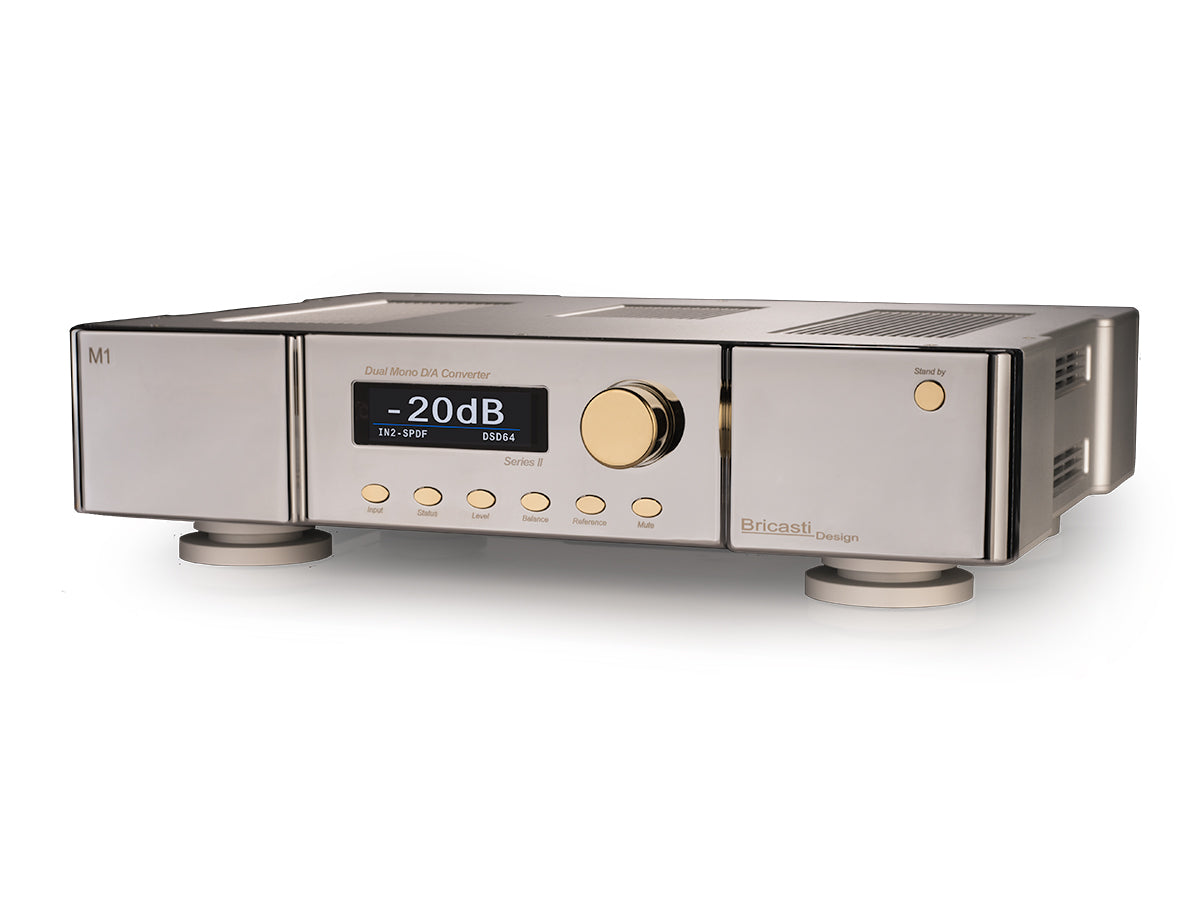
| Finish | Anodized aluminum, nickel plating with brass knobs and buttons |
| Dimensions | 17” x 12” x 4.5” |
| Weight | 15 lbs |
| Shipping Weight | 18 lbs |
| Shipping Dimensions | 22” x 17” x 7” |
| Mains Voltage | 100, 120, 220, 240 VAC, 50 Hz – 60 Hz factory set |
| Trigger Out | TRS mini jack, Tip ground, Sleeve 5V |
| Power Consumption | 28 Watts (6W standby) |
| Warranty Parts and Labor | 2 years non-transferable |