



HIFIMAN
Pay Over Time
Split your purchase into easy payments.
Fast approval with Klarna.
Select Klarna at checkout to split your purchase into smaller payments.
Arya Unveiled Headphones
$1,199.00 USDFeatures
Driver-Planar Magnetic and Dynamic Driver
Conductor Layer-Metallic Silver
Cables 1x 3m Balanced XLR, 1x 3m 6.3mm Single-Ended, 1x 1.5m 3.5mm Single-Ended
Video
What's in the Box?
Warranty
Unveil Your Sound
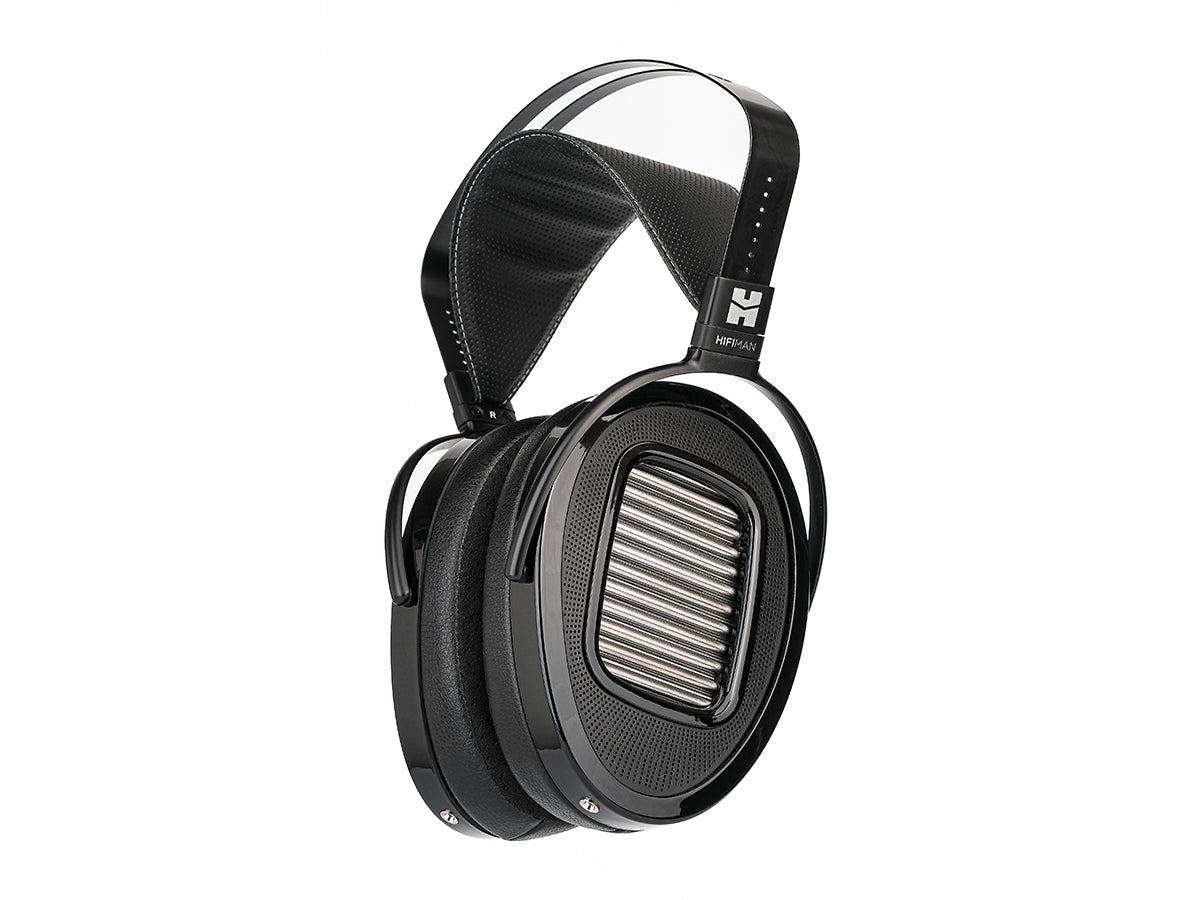
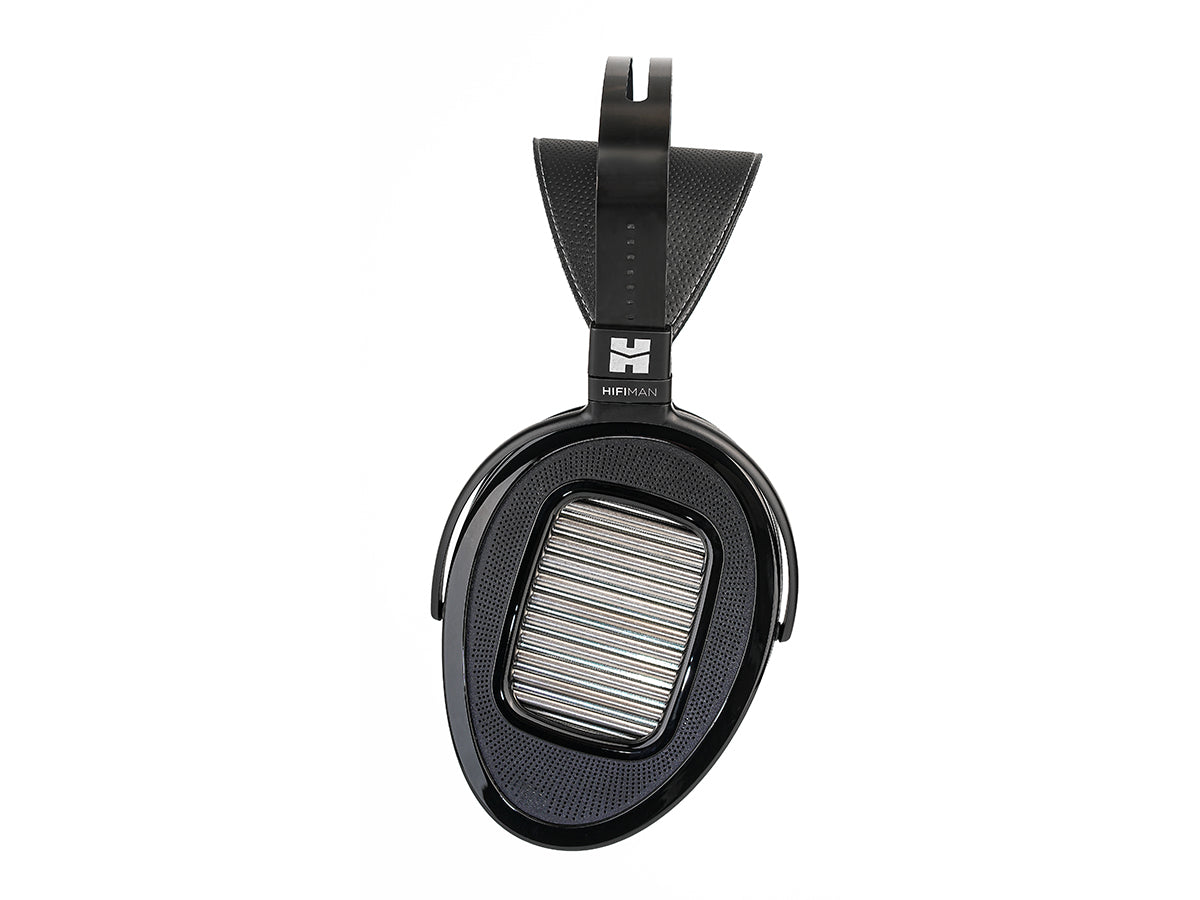
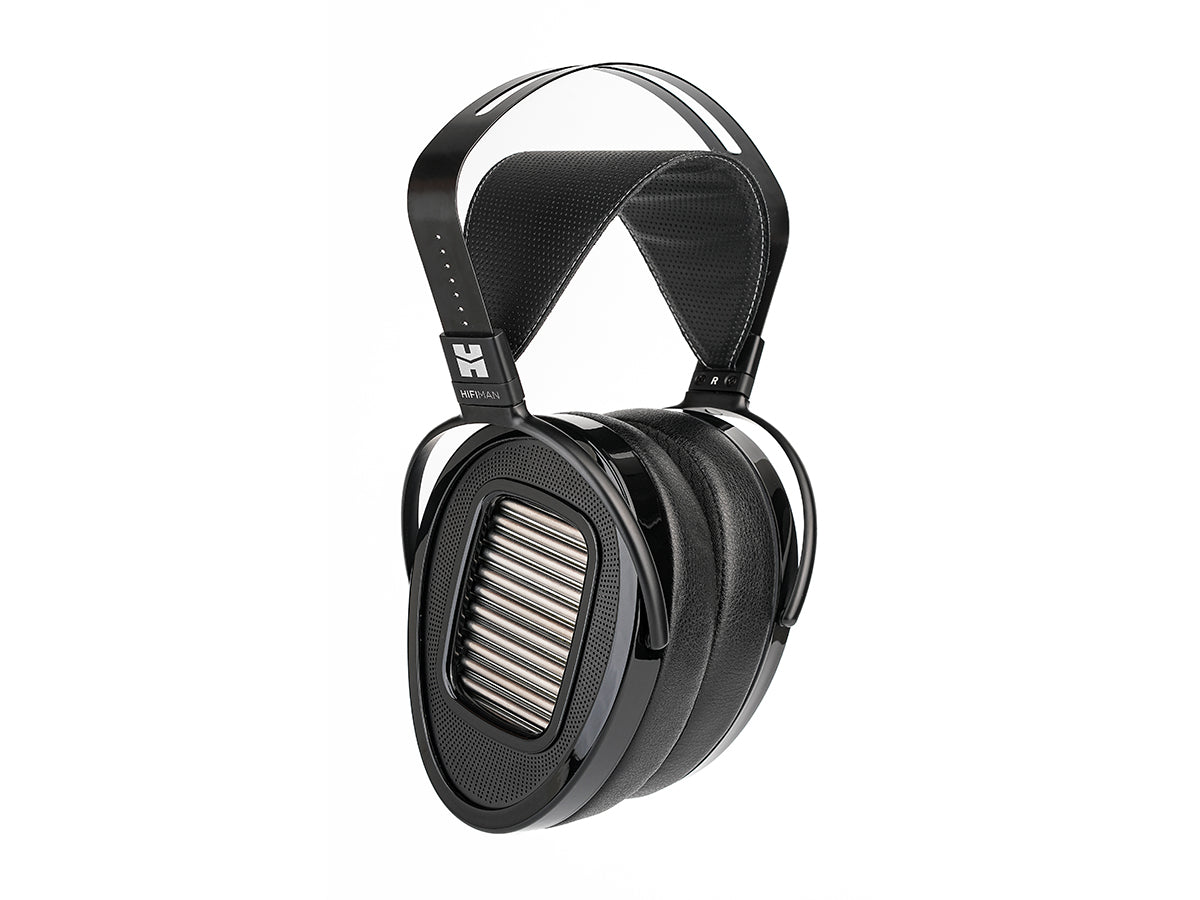
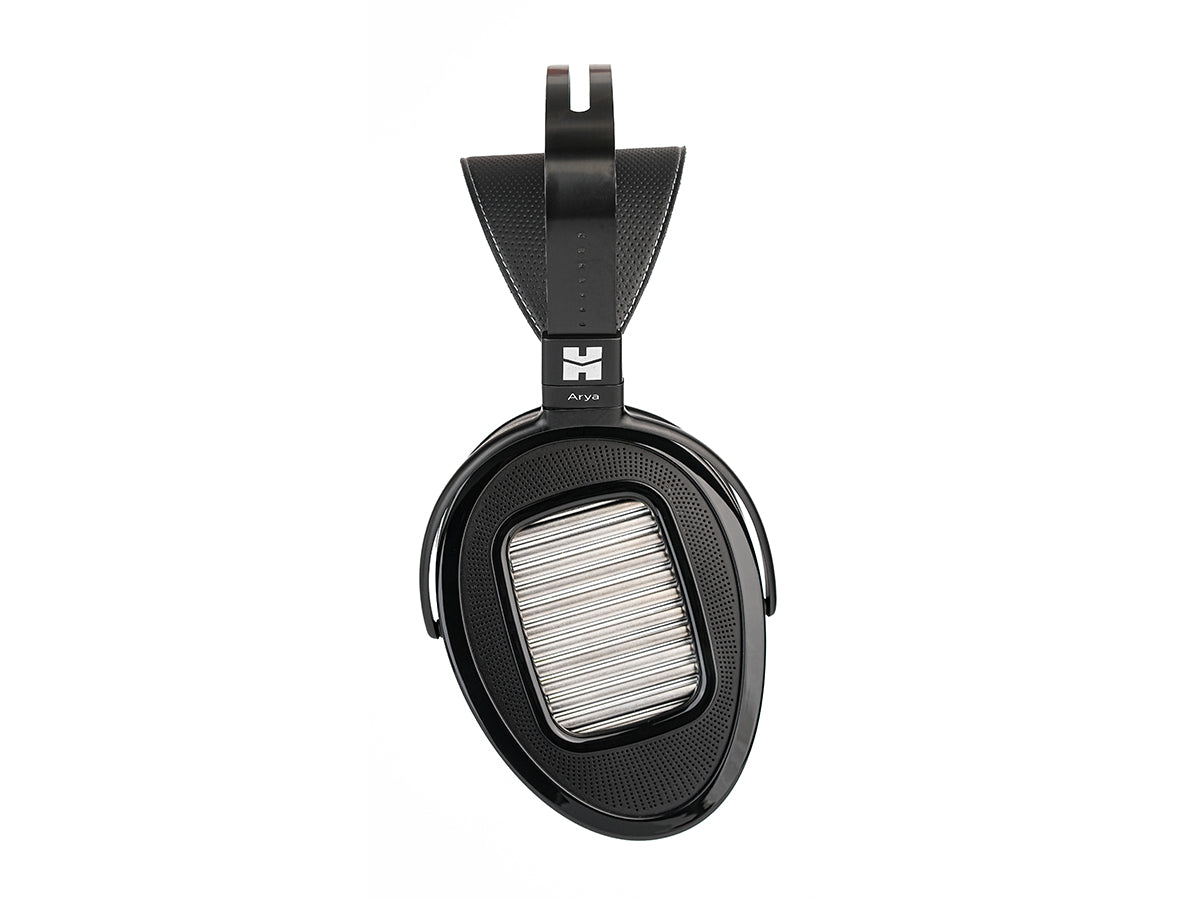
The Arya Unveiled headphones introduce a grille-free, fully open-back design, eliminating the final barrier to perfect sound quality. Traditional headphones suffer from soundwave reflections caused by grilles, but the Arya UNVEILED removes this obstacle entirely. The inspiration behind this removable backplate design comes from HIFIMAN’s flagship SUSVARA headphones, ensuring an optimal soundstage and purity of sound.


Harmful Reflections and Refractions of Sound Waves React on the Diaphragm
Sound waves emitted The sound waves are reflected and refracted by the grill back to the diaphragm The diaphragm is affected and the sound quality is diminished.
Regular Headphones
Commonplace products use mesh with a lower opening ratio as grill that leads to reflections and refraction that are detrimental to sound quality.
Window Shade Design
Since the nanometer thickness diaphragm is very light in weight, it is easily disturbed by sound waves reflected and refracted by the mesh. Therefore, HIFIMAN uses a window shade design to increase the opening rate, maximize the grill exposure and reduce the probability of reflection and refraction. The result: dramatically improved sound quality.
ARYA UNVEILED
The design of the window shade cannot completely avoid reflection and refraction. Only by eliminating the window shade/grill design will near lossless sound quality be achieved.
Magnetic Veils
Specially designed to protect the fully open drivers of the ARYA UNVEILED *Due to the magnetic properties of the driver, it is important to cover the ear cups with the Magnetic Veils to avoid damage caused by absorption of magnetic objects when the product is not in use.
Core Technology - Nanometer Thickness Diaphragm
Low distortion, high transient response, comprehensive improvement of dynamics and details. The thickness of the HE1000 UNVEILED’s diaphragm is under a millionth of a meter. It is extremely light, and gives the headphone extremely fast response speed and outstanding dynamic range and frequency characteristics. Combined with the "Stealth Magnets" technology, the nanometer thickness diaphragm material is essential to the sonic output being clear and non-fatiguing, even after hours of listening.
Acoustically Invisible Stealth Magnets
The special streamlined cross-sectional shape of the Stealth Magnets optimizes and reduces the air turbulence and diffraction between the magnets, allowing the sound to pass between themalmost unaffected, without disrupting the sound quality as is experienced with traditional magnets.Unlike the sound waves created by a conventional magnet, the Stealth Magnets can be thought of as disappearing in front of the sound wave, which reduces many of the adverse effects on the sound.
Stealth Magnets
The special shape of the Stealth Magnets allows the sound to pass through the magnets perfectly without the sound quality degradation of traditional magnets Degradation of sound quality in a conventional planar magnetic headphone is caused by the magnets getting in the way of the sound wave. Conventional electrostatic headphones experience degradation of sound quality caused by the stator's interference. A conventional dynamic driver’s frequency response can be altered due to distortions and vibrations across the diaphragm surface. Conventional dynamic drivers experience a larger frequency response distortion due to the severe distortions across its diaphragm.
HiFiMan Arya Unveiled: The Perfect Fusion of Detail and Musicality
Read Time: Approx. 15 min.

From Acoustic to Classical, their Sonic Performance rivals some of the Very Best Audiophile-Grade Headphones at a Fraction of the Price
HiFiMan's latest unveiled innovation, the Arya Unveiled Headphones are a hidden gem in the sea of high-quality planar headphones. They capture the technical accuracy and precision of the Arya Stealth Magnets and the effortless musicality of the Arya Organic, delivering you a versatile, highly addicting sound. The Arya Unveiled maintains the aesthetics of an Arya series headphone, but flexes its sonic muscle with the help of the innovative window shade grill design and unveiled technology. If you loved the HiFiMan Arya Stealth Magnets and the Arya Organic, you're bound to be thrilled with the Arya Unveiled Headphones. Let's find out why.


PROS
- Incredibly Lightweight & Ergonomic
- Captures the essence of the Arya Stealth Magnets and Arya Organic
-- Excellent frequency extension from 8Hz to 65 kHz
CONS
- Aesthetically different from other Unveiled models
- Not for bass lovers
Design
As the third iteration in the Unveiled series, the Arya Unveiled sports the hallmark features of an unveiled open-back headphone: Window shade grill design and magnetic veils. HiFiMan has eliminated traditional grilles that can cause undesired sound reflections and implemented a metal mesh for more musical detail, enhancing the sense of space and clarity. This window shade open-back design increases the opening rate, maximizing the grill exposure and reducing the portability of reflection and refraction. The CNC-machine, removable back panel veils protect the ear cups from dust and magnetic absorption when not in use. They're designed strictly for protection only and are supposed to be removed before you start listening. It's a simple design that ensures the longevity of your audiophile headphones without compromising their sonic purity.
The overall look of the Arya Unveiled is in line with other HiFiMan models like the Ananda, Edition XS, and HiFiMan Sundara. You've got the signature metal headband with the adjustable head strap and large oval-shaped ear cups that swivel. As a highly affordable HiFiMan headphone, the Arya Unveiled's is constructed with metal and plastic. Compared to other Arya models–like the Arya Organic and Arya Stealth Magnets Planar Magnetic Headphone–the Arya Unveiled resembles the Stealth the most. It's got an all-black color scheme which is different than what we've seen from the SUSVARA Unveiled and HE1000 Unveiled, which feature silver ear cups.


Fit and comfort-wise, the Arya Unveiled is perfect. HiFiMan over-ear headphones' build quality always rank high in my book because there's nothing I love more than an adjustable headband. I've got a small head and tiny ears, so when a pair of headphones has a self-adjusting headband and weighs a decent amount, I'm always uncomfortable. HiFiMan's headband design lends to its incredible weight dispersion. I never felt like my ears carried the entire weight of the headphones or there was an uncomfortable clamping force, and I enjoyed a very nice listening experience. The ear pads are no different than what we've seen in the past: Cushy, sweat-free, and breathable. All in all, for $1,400 you're getting a nicely built high-end headphone.
Included with the Arya Unveiled is a 3.5mm connector to 6.35mm single crystalline copper headphone cable. Luckily for you, we've got some headphone cable recommendations below that offer incredible performance.
Sound
Do you always burn in your new headphones? If you don't...let this be your reminder to! Soon after receiving the Arya Unveiled, I paired it with the Astell&Kern SP3000M DAP and started listening. Well, it didn't take me long to realize "something's not right here." The Arya Unveiled desperately needed to be burned in before I put any miles on it. After spending over eight hours plugged into the hifi dCS LINA Stack (LINA Network DAC, LINA Headphone Amplifier, LINA Master Clock), these cans were ready. Dedicating time to burn in your headphones makes a tremendous difference in the sound quality. In the case of the Arya Unveiled, the planar magnetic drivers needed to stretch their legs and they demanded a highly efficient amp to power them. I had the best success pairing the Arya Unveiled with the Shanling M9 Plus DAP during my listening sessions.


The Arya Unveiled brings the Arya Stealth Magnets' accuracy and the HiFiMan Arya Organic's effortless musicality to the center stage. Vocals are rich with a midrange that's lively and dynamic. Overall the tuning of the Arya Unveiled is quite linear, but not too linear. It by no means falls into the analytical category. It accurately represents music just the way the artist intended–which is always the goal. You get a nice, natural warmth to the midrange that's in line with the Arya Organic's sound. If I could emphasize anything about the midrange performance it's the warmth and richness. As a writer I always look for emotion in a song. I want to experience the emotion behind an artist's vocals. That's what makes a song in my opinion. You know, anyone can get on stage and recite some lyrics but if their heart isn't in it, you can tell. The Arya Unveiled transported me to the artist's recording booth like I was sitting next to them pulling on their heart strings. Female and male vocals had timbre for days: Resolute, natural, exuding with character. I could go on.
The linear tuning of the Arya Unveiled makes it the perfect match for acoustic, vocal-centric genres. String instruments, live performances, country hits. You name it. So how does the low end sound? The Arya Unveiled delivers a surprisingly impressive low-end response for having a linear tuning. Now it's not a bass monster but it's got a tight and punchy sub-bass with some physicality to it–more so than the Arya Stealth Magnets and Arya Organic. 50 Cent songs were fast and articulate with a bass response that added to the song without turning it into some crazy wub fest. I love bass but I don't love when it muddies up the rest of a song, you know.
Who is the Arya Unveiled for? The Arya Unveiled is the perfect headphone for the audiophile who wants the most accurate representation of music without all the unnecessary added fillers. It's versatile with nice texture, instrument separation, and a satisfying soundstage. It's the Arya Organic but better. More resolute, better bass response, incredible treble extension. If you're stuck between the Arya Organic and Arya Stealth Magnets, the Arya Unveiled sits happily in the middle, delivering you everything those two headphones offer, but elevated and refined.

DJ's Chord Organ
By Mac Miller
(Balloonerism)

Many Men (Wish Death)
By 50 Cent
(Get Rich or Die Tryin')

Defying Gravity
Performed by Cynthia Erivo (ft. Ariana Grande)
(The Wicked Soundtrack)

Stadium Arcadium
By Red Hot Chili Peppers
(Stadium Arcadium)
Features
Window Shade Design: HiFiMan has eliminated traditional grilles that can cause undesired sound reflections and implemented a metal mesh for more musical detail, enhancing the sense of space and clarity. This window shade design increases the opening rate, maximizing the grill exposure and reducing the portability of reflection and refraction.
Unveiled Technology: Removing the grill that sometimes interferes with the movement of the company's nanometer thickness diaphragm. As a result, the soundstage widens with greater depth to deliver an exceptionally pure audio experience.
Nanometer Thickness Diaphragm & Stealth Magnets Design: The Nanometer-Grade Diaphragm and Stealth Magnets are nothing new in a HiFiMan headphone. Low distortion, high transient response, and improved details and dynamics are some sonic qualities you'll experience with HiFiMan's diaphragm. The thickness of the Arya Unveiled's diaphragm is under a millionth of a meter and is extremely lightweight, giving the headphones a fast response speed and outstanding dynamic range and frequency characteristics. Combined with the Stealth Magnets technology, the nanometer-thickness diaphragm material is essential to the sound quality being clear and non-fatiguing, even after hours of listening.
HiFiMan's proprietary Stealth Magnets were designed to solve a problem typical of headphones with magnets: sound waves passing through the magnets generate interference. Unlike sound waves generated by conventional magnets, Stealth Magnets feature a special shape that allows sound waves to pass through without generating interference. HiFiMan's advanced magnet design is acoustically transparent, dramatically reducing wave diffraction turbulence that degrades the integrity of the sound waves. The reduced distortion yields pure sonic output that is accurate and full-range.
Comparison
As the latest addition to the Arya line, the Arya Unveiled fits right in with some noticeable design choices that resemble the Arya Stealth Magnet version. You've got the same all-black color scheme which differs from the wooden ear cups on the Arya Organic. Weight-wise, the Arya Stealth Magnets is the heaviest. The Unveiled fits and feels practically identical to the Arya Organic, providing me with nothing but comfort for hours on end.
I touched on this briefly in the sound section, but the Arya Unveiled takes everything great about the Arya Stealth Magnets and Ayra Organic and combines it into one headphone. The Arya Stealth Magnets are known for its technical precision. If you love details and accuracy, that's the headphone for you. On the other end, the Arya Organic takes a more musical, fun approach, delivering you a natural, slightly warm sound. It's still got the detail retrieval of the Stealth but it's dressed up with some vocal richness and support for more dynamic genres.
While all three headphones are open-back, the Arya Unveiled feels the least "open." I think that can attributed to the soundstage. Both previous gen. Arya's have an incredibly open and wide soundstage, while the Arya Unveiled's soundstage felt a little closer. It almost resembles a closed-back hybrid headphone. The Unveiled has the most mid-bass slam of all three headphones and it's by far the most versatile genre-wise. And speaking of genres, I'd say that each have their own respective genres and listeners. The Arya Stealth Magnets is the perfect headphone for the audiophile who values details, accuracy, and technical precision. If you listen to mostly blues, folk, country, rock, and metal, the Arya Stealth Magnets is a good fit. The Arya Organic also compliments folk and country but it really shines with classic rock and indie. It's kind of a "sleeper" headphone if you will, meaning that it doesn't get the hype it deserves–in my opinion. But the Arya Unveiled comes in hot on the Organic's tail. It delivers a rich, musical experience with enough oomph to support Hip-Hop, EDM, and Rock–three genres the Stealth and Organic can handle, but not as well.
Dragon Cables
[Silver Dragon Premium Cable for HiFiMan Headphones]
With every new headphone, we put it through rigorous testing finding all the sonic strengths and weaknesses. We recommend our Silver Dragon Premium Headphone Cable for both the Arya Stealth Magnets and Arya Organic so it's not surprising how good it sounded with the Arya Unveiled. While I did enjoy the enhanced warmth and elevated low-end response the Black Dragon delivered, depending on the song it was almost too much. The Silver Dragon Premium Headphone Cable enhanced the detail retrieval of the Arya Unveiled, adds a nice amount of clarity to vocals and instruments. With exceptional top-end resolution I never experienced any sparkle or pitchiness to the Arya Unveiled's tonality.

Verdict
The HiFiMan Arya Unveiled Headphones are the happy middle in the Arya series. In other words, if the Arya Stealth Magnets and Arya Organic had a child it would be the Unveiled. You get the detail, resolution, and accuracy of the Arya Stealth with the organically musical sound of the Arya Organic. Between the stealth and the organic, I always gravitated toward the organic's sound–It checked a lot of boxes for me. Well, move over organic because there's a new favorite in the house!
The Arya Unveiled Headphones are sweet, silky, and smooth, pairing effortlessly with your favorite genres. From Hip-Hop to acoustic and classical, the Arya Unveiled's sonic performance rivals some of the very best audiophile-grade headphones like the Sennheiser HD800S at an incredible price point! You just can't beat it. Not to mention, they're pair great with our Silver Dragon Premium Headphone Cable which taps into and elevates the detail, resolution, and clarity of the Arya Unveiled. If you love a natural, warm-leaning sound, the Arya Unveiled Headphones are the perfect cans for your 2025 playlist.
Featured Products
Related Videos
HiFiMan SUSVARA UNVEILED Headphones Review, Unboxing & Comparison
How to Pick Your Perfect Pair of Headphones
HiFiMan HE1000 Unveiled Unboxing: Premium Planar Magnetic Headphones
What's in the Box

- Pair Arya Unveiled Headphones
- 1.5m Headphone Cable (6.35mm Plug)
- Pair of Magnetic Veils
- Pair of Ear Pads (Mounted on Headphone)
Specifications
Frequency Response: 8Hz-65kHz
Impedance: 27 Ohms
Sensitivity: 94dB
Net Weight: 413g (excluding magnetic veils and headphone cable)

| Parameter | Specification |
|---|---|
| Physical Specifications | |
| Net Weight | 413g (excluding magnetic veils and headphone cable) |
| Technical Specifications | |
| Impedance | 27Ω |
| Audio Specifications | |
| Frequency Response | 8Hz-65kHz |
| Sensitivity | 94dB |
- APAnthony P.Verified BuyerRated 5 out of 5 stars1 year agoWow !!!
The sound is stunning for my ears. They are perfect. The highs are smooth the mid range the voices I’ve never heard singers sound like like they sound through the headphones The Bass there is plenty of it. There is almost 3-D sound coming out of these things the soundstage is unbelievable and how it places all the instruments and the voices are. I don’t know how it’s doing, but it’s phenomenal the head. The only headphone via E3 are a little bit better I believe, I think I wanna try the 1000 unveiled there is a review out there where the reviewer you can hear it. His voice is just just stunned or amazed by by the 1000 unveiled anyway thank thank you guys I will be in touch.